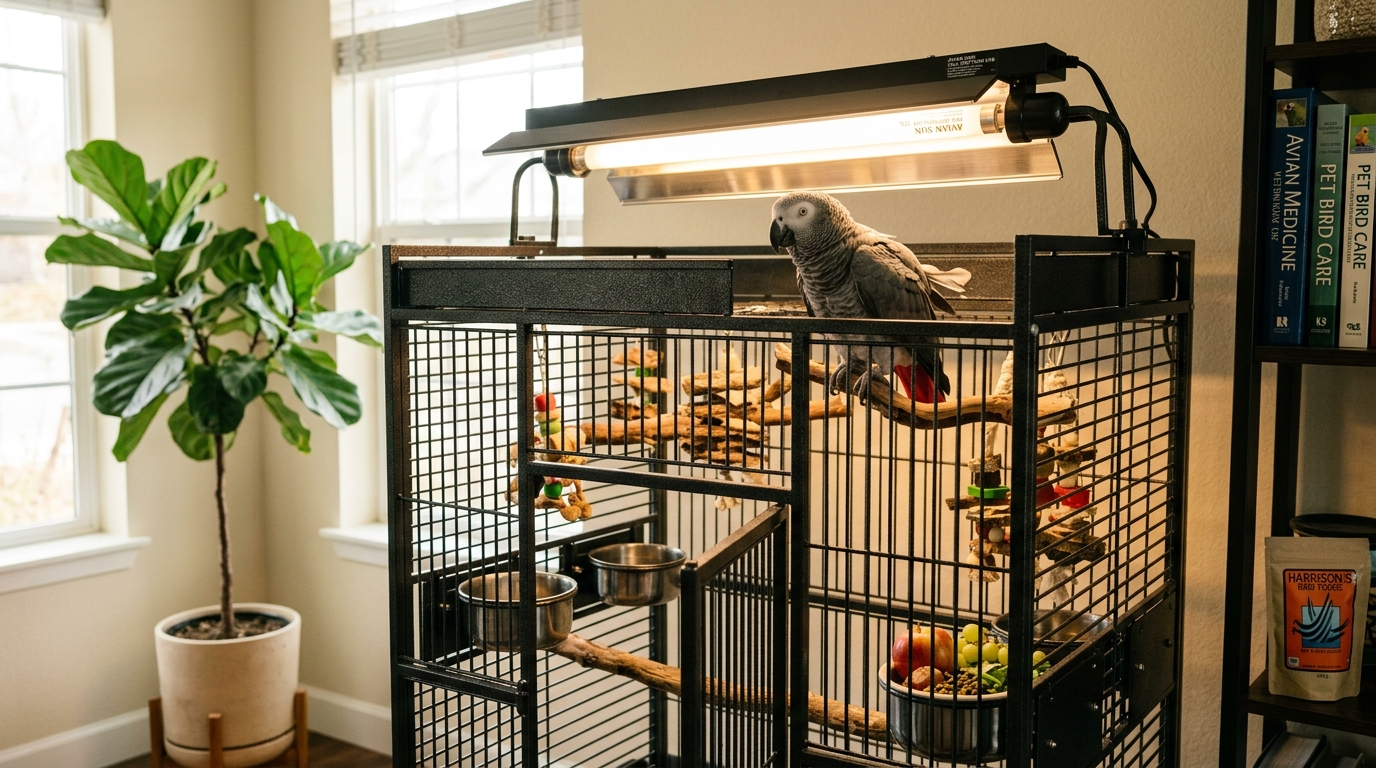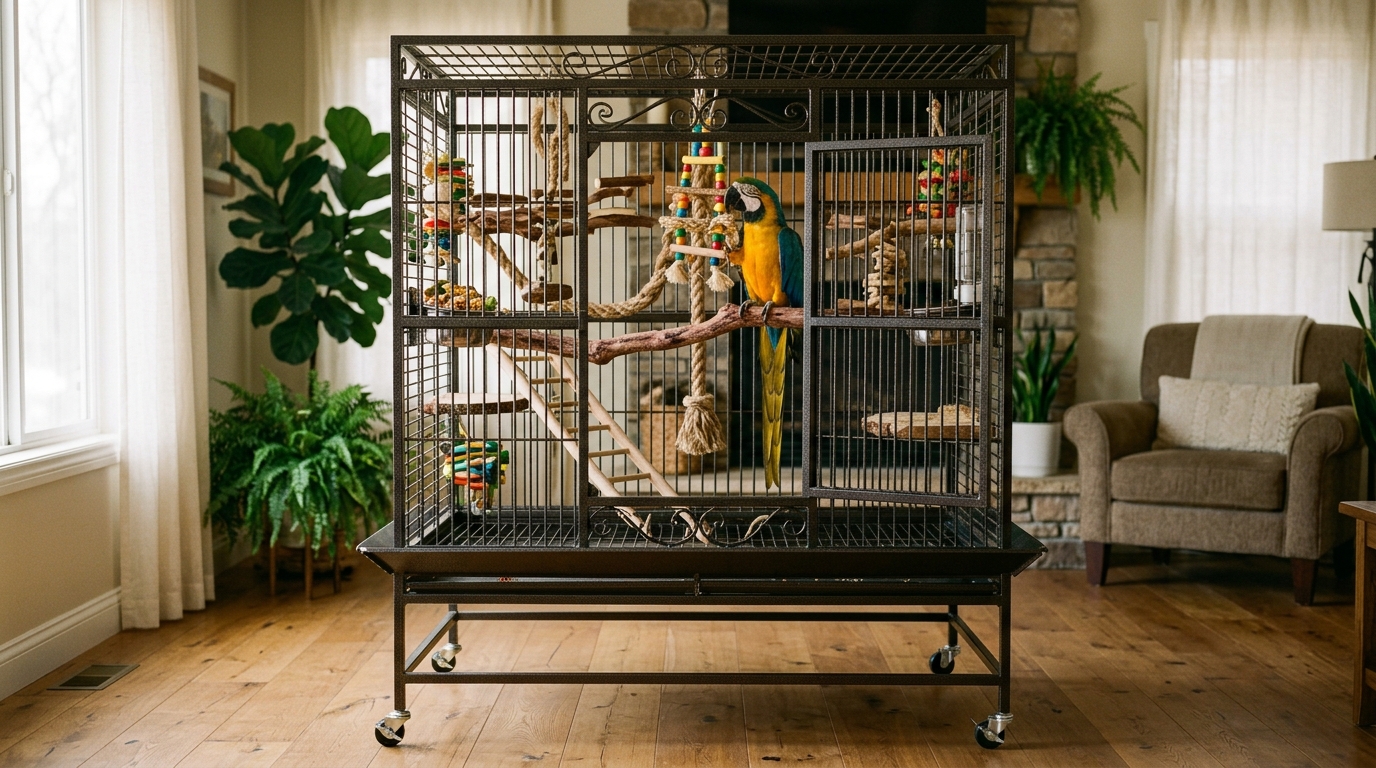
In the wild, parrots (such as African Greys, Conures, Amazons, and Cockatoos) spend between 60% and 80% of their waking daylight hours actively foraging for food—solving spatial problems, stripping tough nutshells, and navigating tree canopies.
When confined to an indoor cage with a stationary food bowl full of easily accessible seeds, intelligent birds quickly experience profound mental boredom, leading to severe behavioral pathologies: chronic screaming, cage biting, and agonizing self-mutilating feather destructive behavior (feather plucking).
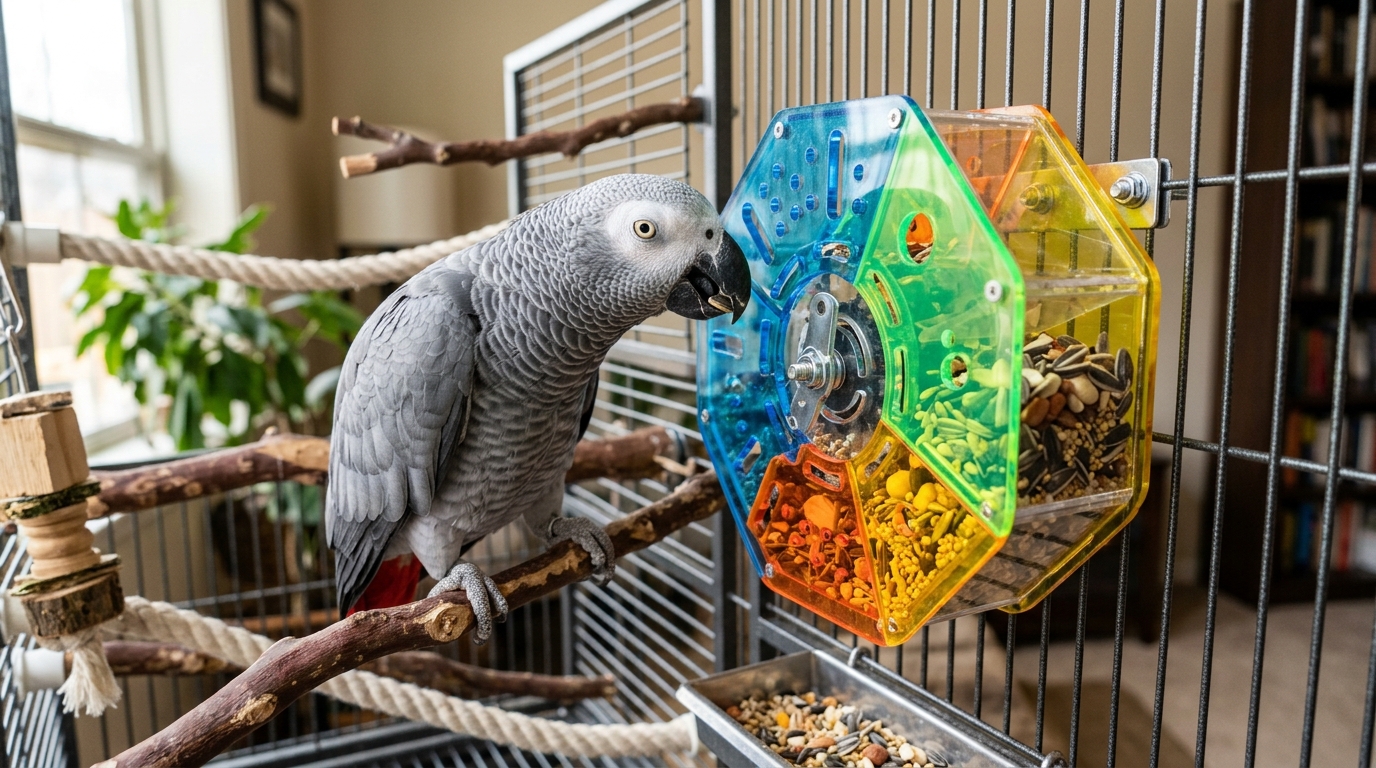
An interactive rotating acrylic foraging wheel recreates wild foraging challenges, turning mealtime into a stimulating cognitive game.
How Acrylic Foraging Wheels Work
Mounted securely to cage bars via heavy-duty stainless steel wingnuts, a foraging wheel features multiple distinct triangular chambers:
- Rotational Problem Solving: The parrot must use its beak and feet to spin the heavy wheel until a specific chamber aligns with the single extraction hole.
- Tactile Manipulation: Once aligned, the bird must hold the wheel steady with one foot while reaching inside with its beak or tongue to extract sunflower seeds, dried fruit chunks, or pine nuts.
- Clear Visual Motivation: Transparent polycarbonate walls let the bird see the coveted treats inside, driving persistent problem-solving drive for hours.
Shop Heavy-Duty Acrylic Parrot Foraging Wheels on Amazon
Foraging Toy Progression: From Beginner to Master
- Level 1 (Beginner): Skewer fresh apple slices and carrot chunks on a stainless steel kabob rod.
- Level 2 (Intermediate): Wrap walnuts and almonds in plain, unbleached coffee filters or twist them inside cardboard cupcake liners.
- Level 3 (Advanced): Introduce multi-chamber rotating wheels, slide-drawer boxes, and combination lock puzzles.
Browse Stainless Steel Foraging Skewers & Kabobs for Birds on Amazon
Frequently Asked Questions (FAQ)
Are acrylic foraging toys safe for large macaws?
Yes, high-end foraging toys are fabricated from 4mm to 6mm indestructible shatterproof polycarbonate that withstands the 500+ psi crushing beak force of Macaws and Cockatoos.
How do I teach a fearful bird to use a foraging wheel?
Leave the wheel unlocked with the treat chamber wide open and full of favorite treats for the first week. Once your bird eats from it fearlessly, begin locking chambers progressively.