Tropical companion birds—such as Parakeets (Budgies), Cockatiels, Lovebirds, and Conures—originated in equatorial climates where temperatures rarely drop below 70°F (21°C).
In modern air-conditioned homes or during freezing winter drafts, birds must expend tremendous metabolic energy fluffing their down feathers to stay warm. Prolonged exposure to drafts compromises avian immune systems, leaving them vulnerable to life-threatening respiratory infections (aspergillosis and sinus pneumonia).
A low-voltage side-mounted bird cage heater creates a cozy thermal sanctuary where birds can press their bodies directly against gentle radiant warmth.
Why Snuggle-Up Cage Warmers Outperform Heat Lamps
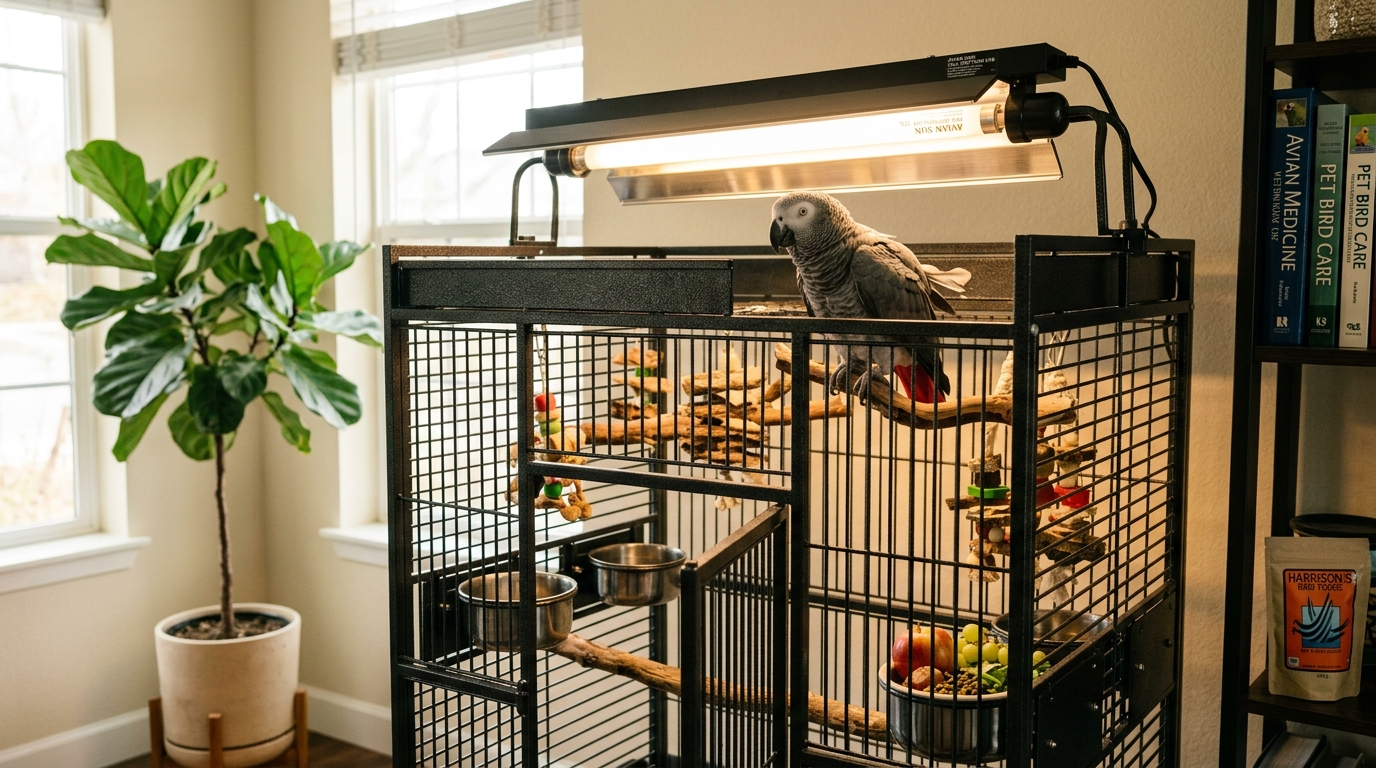
Traditional ceramic heat bulbs and infrared heat lamps emit intense, uncalibrated heat that can easily overheat a small cage or cause corneal cataracts if stared at directly.
In contrast, low-voltage snuggle-up panel heaters offer superior avian safety:
- Safe Direct Touch (102°F to 107°F): Matches a bird’s natural core body temperature. The smooth panel stays warm to the touch without ever becoming hot enough to burn delicate bare skin.
- Zero Visible Light Output: Emits gentle thermal radiation with zero light, preserving vital 10-to-12-hour uninterrupted dark sleep cycles.
- Steel-Coiled Chew-Proof Cord: The low-voltage electrical cord is encased in a flexible steel wire sleeve so curious parrot beaks cannot bite through live wires.
Shop Safe Low-Voltage Snuggle-Up Bird Cage Warmers on Amazon
How to Position a Cage Heater Correctly
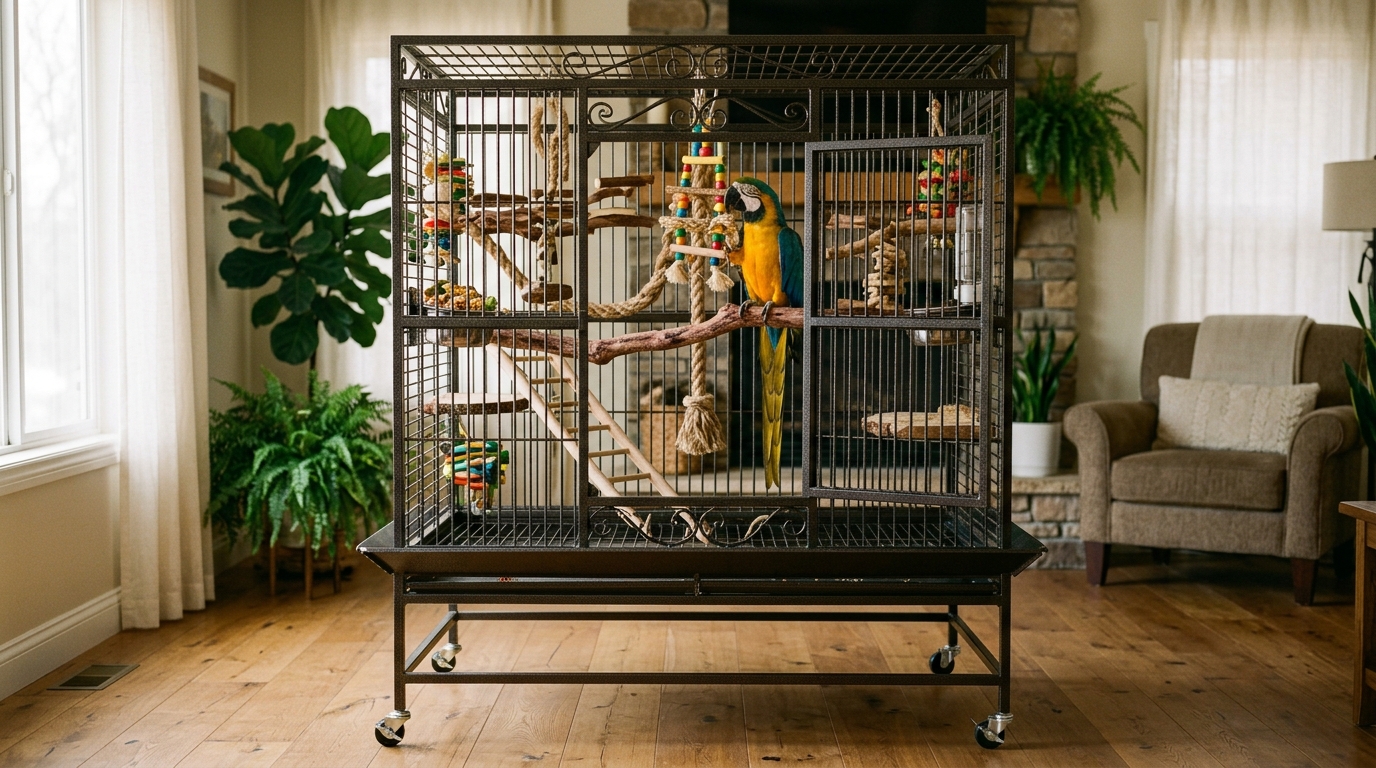
- Mount Beside the Highest Sleeping Perch: Mount the panel on the wire wall directly adjacent to your bird’s favorite nighttime roosting perch so they can lean against it at will.
- Maintain a Thermal Gradient: Never heat the entire cage! Heat only one corner of the enclosure so your bird can freely hop away to a cooler perch if they feel too warm.
Browse Insulated Nighttime Bird Cage Covers on Amazon
Frequently Asked Questions (FAQ)
How can I tell if my pet bird is too cold?
A cold bird sits fluffed up into a spherical ball on both feet, tucks its beak into its back feathers, and appears lethargic with glassy eyes. If you see shivering, warm the bird immediately.
Are space heaters safe to use in a bird room?
Be extremely cautious! Never use space heaters with non-stick Teflon (PTFE/PFOA) coatings, as toxic fumes emitted when heated cause instant fatal pulmonary hemorrhage in birds. Only use certified PTFE-free oil-filled radiators or low-voltage cage heaters.