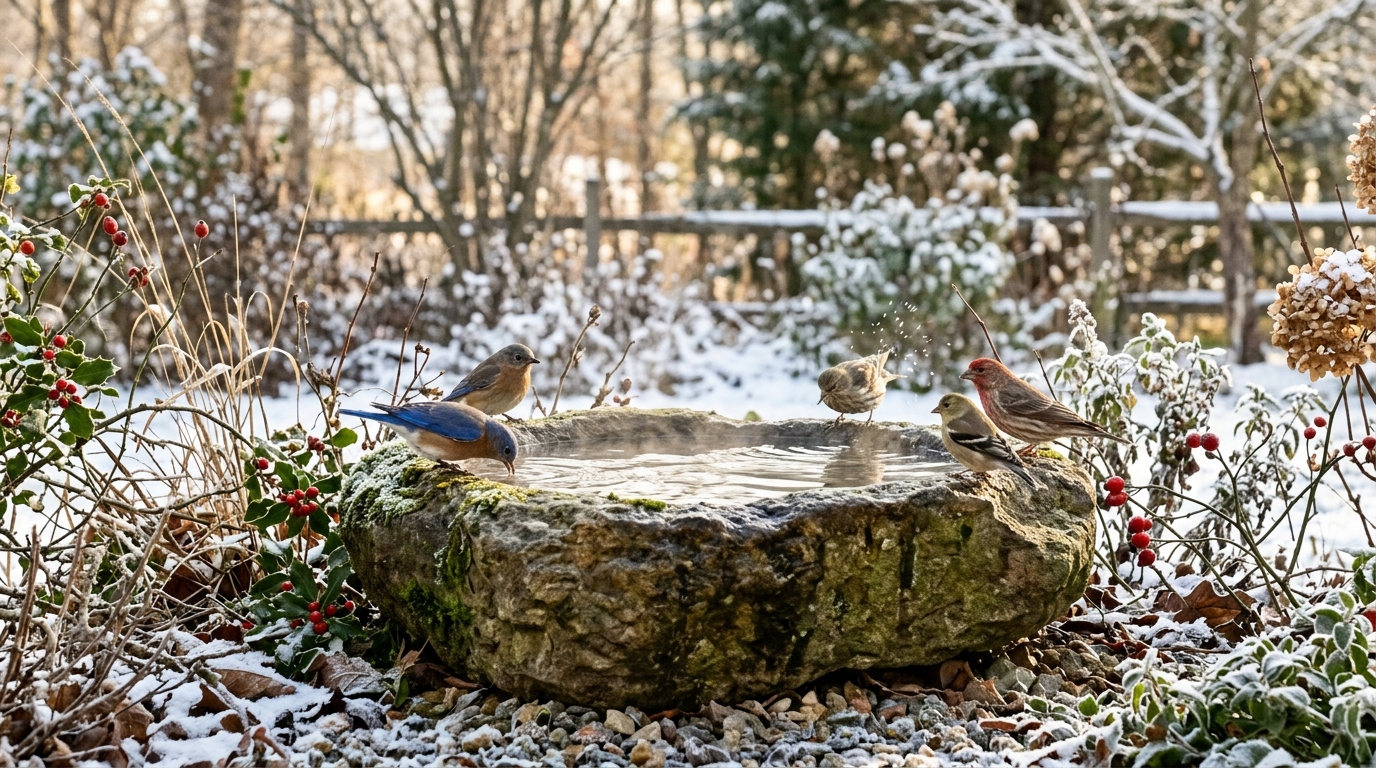
During bitter sub-zero winter months, finding liquid water becomes a matter of life or death for non-migratory wild songbirds (such as Cardinals, Chickadees, Bluebirds, and Finches).
While birds can eat snow in desperate emergencies, consuming frozen crystals drastically drops their core body temperature, burning through precious fat reserves needed to survive frigid winter nights.
A thermostatically controlled heated bird bath keeps water ice-free down to -20°F (-29°C) with minimal electrical draw, transforming your backyard into a bustling bird oasis all winter long.
Heated Baths vs. Drop-In De-Icers: What Do You Need?
- All-in-One Heated Bird Baths: Feature heating coils sealed permanently inside durable, frost-proof polymer or cast stone basins. They look like elegant garden pedestals with no visible heating elements.
- Submersible Drop-In De-Icers: Heavy cast aluminum heating pucks that you simply drop into the bottom of your existing summer stone or metal bird bath, keeping water open and liquid.
Shop Thermostatically Controlled Heated Bird Baths on Amazon
Key Safety & Performance Features
- Automatic Thermostat (Energy Saver): Turns the heating element on only when water drops below 35°F (2°C) and shuts off when water reaches 45°F, saving electricity on mild days.
- Shallow Sloped Basin with Textured Rims: Wild birds will not drink from water deeper than 1.5 to 2 inches due to drowning risk. Shallow basins with non-slip perches provide secure footing.
- Chew-Proof Anti-Squirrel Cord Guard: A flexible stainless steel coiled conduit protecting the power cord from chewing squirrels and raccoons.
Browse Submersible Cast Aluminum Bird Bath De-Icers on Amazon
Frequently Asked Questions (FAQ)
Will birds bathe in a heated bird bath in freezing winter?
Yes! Clean feathers are essential for winter insulation. When feathers are dirty, they lose their ability to trap warm air against the bird's skin. Birds will drink and splash briefly even in freezing snow.
How much electricity does a heated bird bath use?
Most efficient units operate between 50 and 150 watts and only cycle on when ambient temperatures dip near freezing, adding just a few dollars to your monthly winter electric bill.