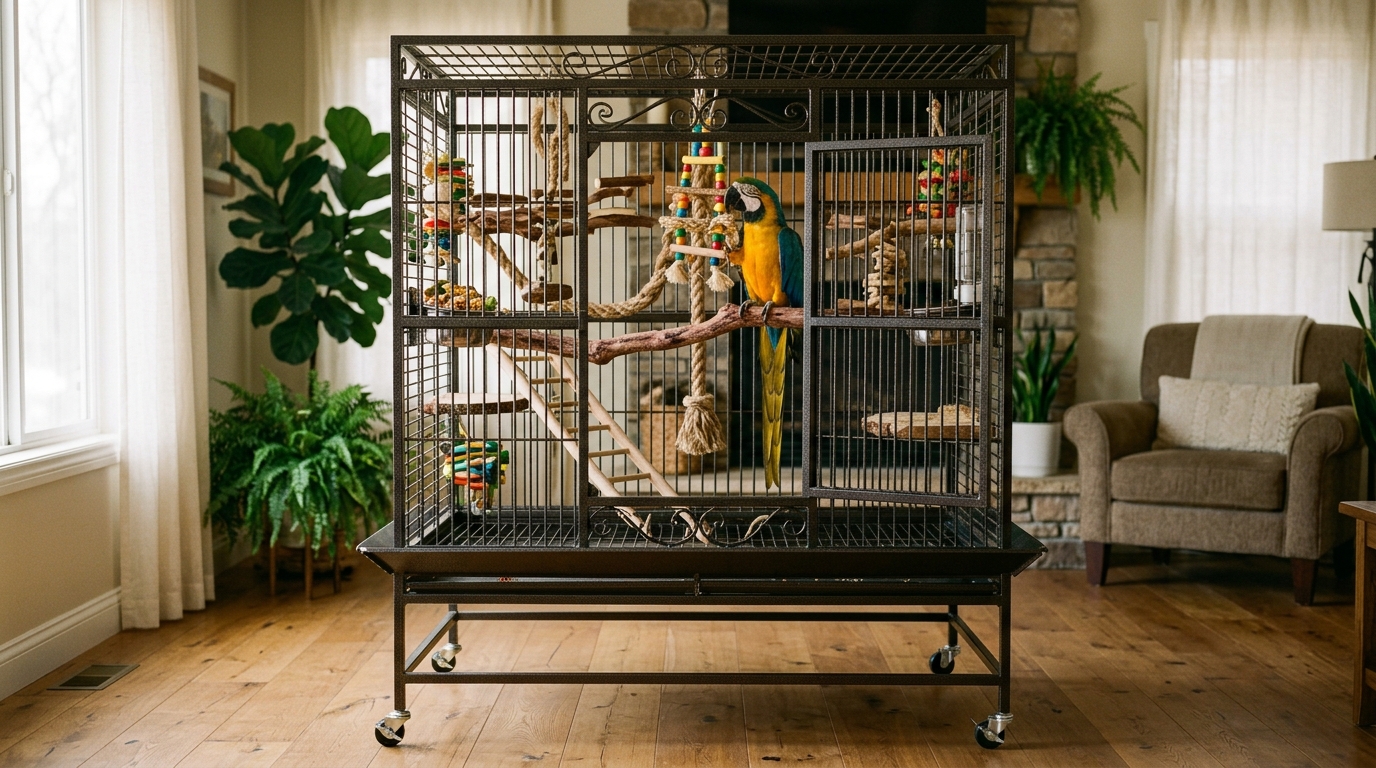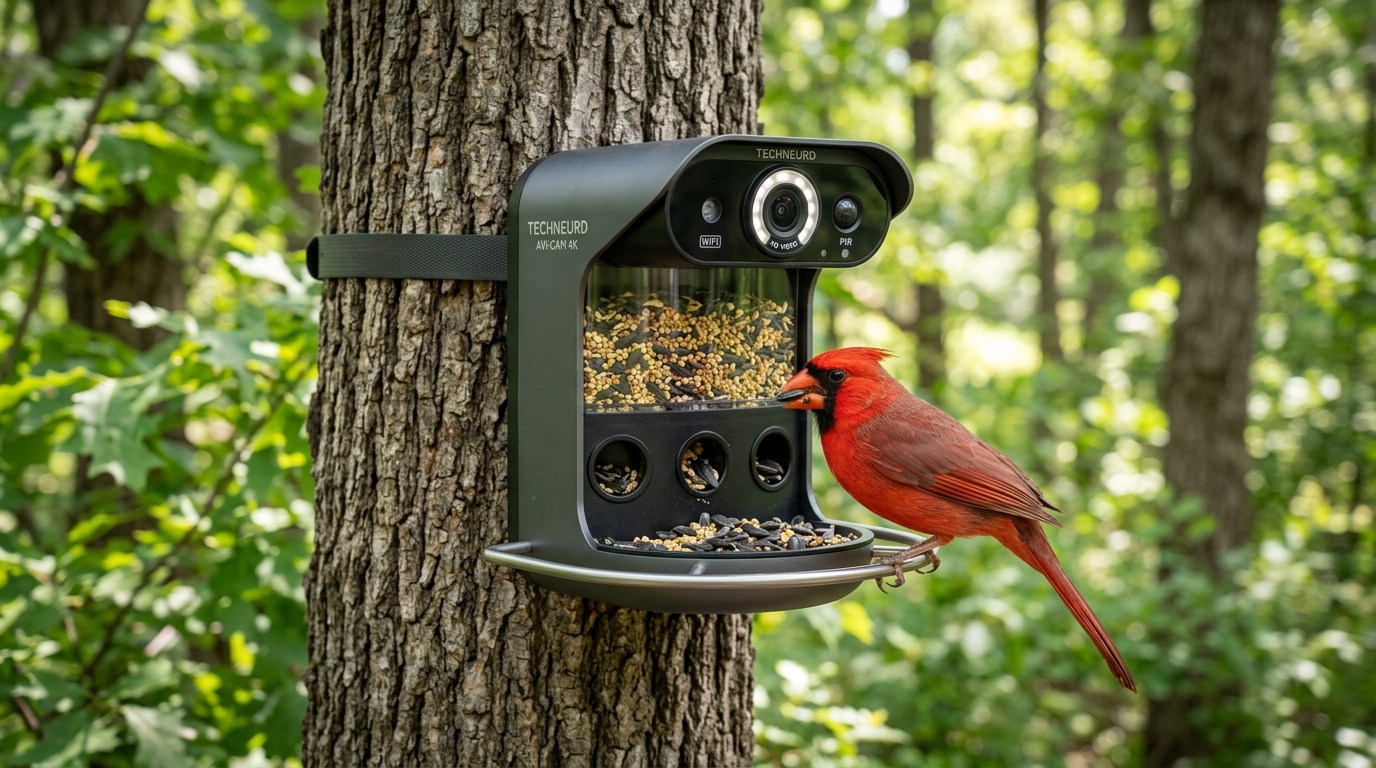
In their native tropical and subtropical habitats, parrots, finches, and canaries bask in vibrant natural sunlight. Sunlight provides critical ultraviolet radiation across two spectra: UVA (315-400 nm), which birds use to see vivid colors invisible to the human eye, and UVB (280-315 nm), which synthesizes vitamin D3 in the skin and preen gland.
Because standard home window glass blocks virtually all UVB radiation, indoor companion birds frequently suffer from chronic vitamin D deficiency, hypocalcemia, brittle feathers, and psychological stress.
A specialized avian full-spectrum UVB light brings the healing benefits of the sun indoors.
How Avian UVB Lighting Transforms Bird Health
- Natural Vitamin D3 Synthesis: Allows the preen gland to produce provitamin D, which birds ingest while preening their feathers, enabling proper calcium absorption.
- Curbs Feather Destructive Behavior: Proper light cycles and visual spectrum stimulation reduce boredom, screaming, and feather plucking.
- Enhances Tetrachromatic Vision: Birds possess a fourth color cone receptor. Avian full-spectrum lighting lets birds see true plumage brilliance and identify ripe foods naturally.
Shop Vet-Approved Avian Full-Spectrum UVB Lights on Amazon
What to Look for in an Avian Light Fixture
- Flicker-Free Electronic Ballast: Birds process visual frames much faster than humans (up to 100+ Hz). Cheap household fluorescent bulbs flicker uncomfortably to avian eyes. Always choose certified high-frequency flicker-free avian ballasts.
- Balanced Safe Output: Look for 2.4% UVB and 12% UVA output designed specifically for avian species (reptile bulbs are often too intense and can damage bird retinas).
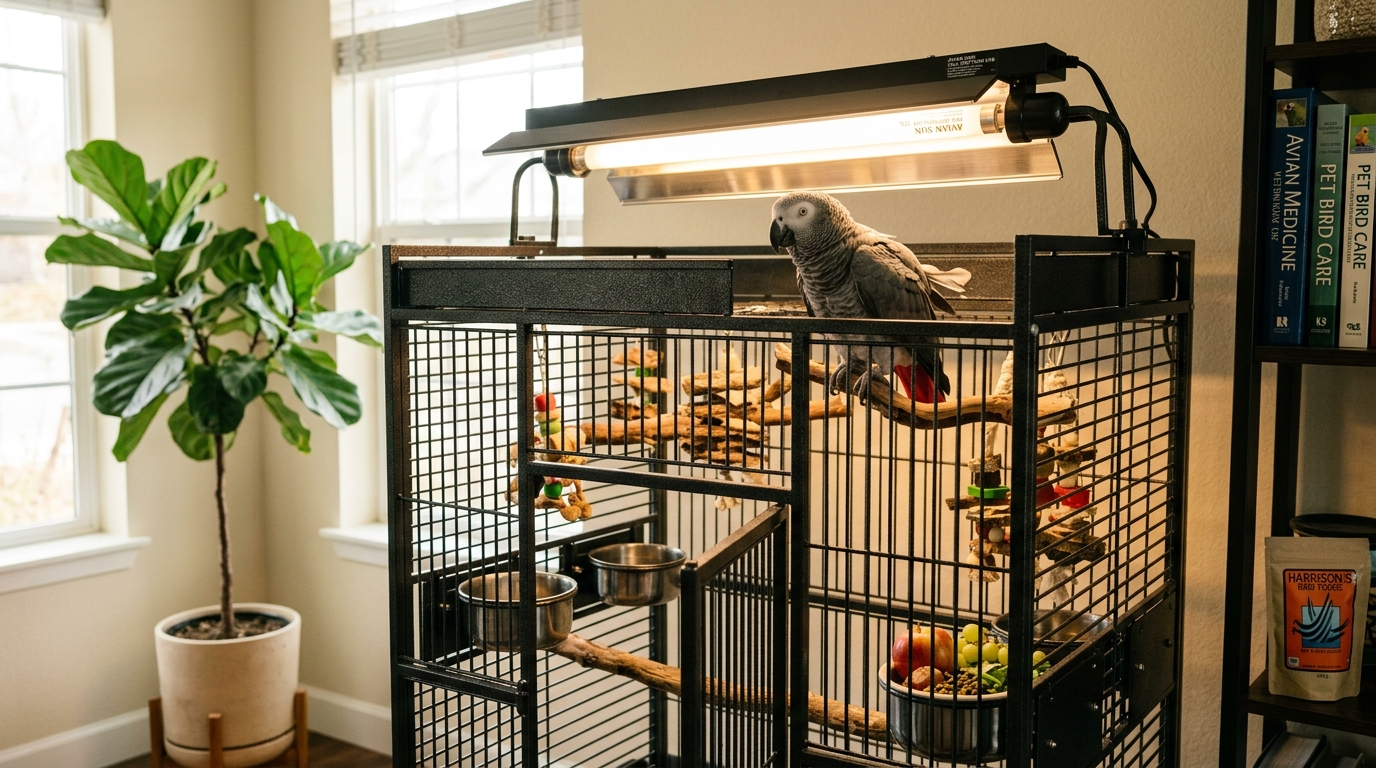
- Positioning Guidelines: Mount the fixture directly above the cage, 12 to 18 inches above the highest perch, and run on a timer for 8 to 10 hours daily.
Browse Heavy-Duty Stainless Steel Parrot Cages on Amazon
Frequently Asked Questions (FAQ)
Can I just place my bird's cage next to a sunny window?
No. Standard window glass filters out 99% of UVB radiation while allowing heat to build up, creating a greenhouse effect that can overheat your bird without providing any vitamin D3 benefits.
How often should avian UVB bulbs be replaced?
UVB phosphors degrade over time even if the bulb still emits visible light. Replace avian UVB bulbs every 9 to 12 months to maintain therapeutic ultraviolet levels.