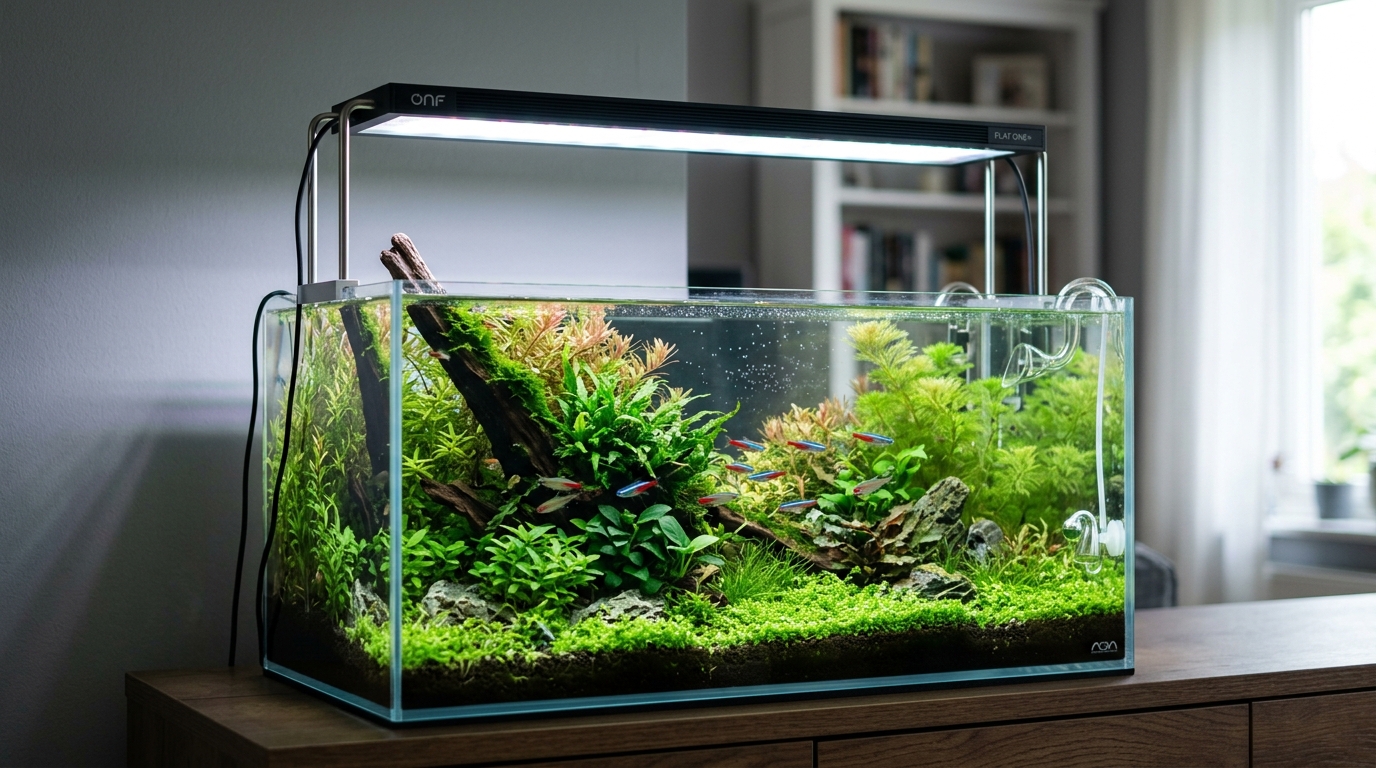
In the world of planted aquariums (aquascaping), carbon is the fundamental structural backbone of all plant tissue. Under intense aquarium LED lighting, aquatic plants quickly exhaust dissolved carbon dioxide in the water, halting photosynthesis and triggering explosive green hair algae blooms.
While commercial paintball or 5-lb gas cylinder setups cost upwards of $300 to $400 and require frequent visits to welding supply shops, chemical DIY pressurized stainless steel CO2 generators offer an affordable, high-precision alternative.
How Stainless Steel Chemical CO2 Generators Work
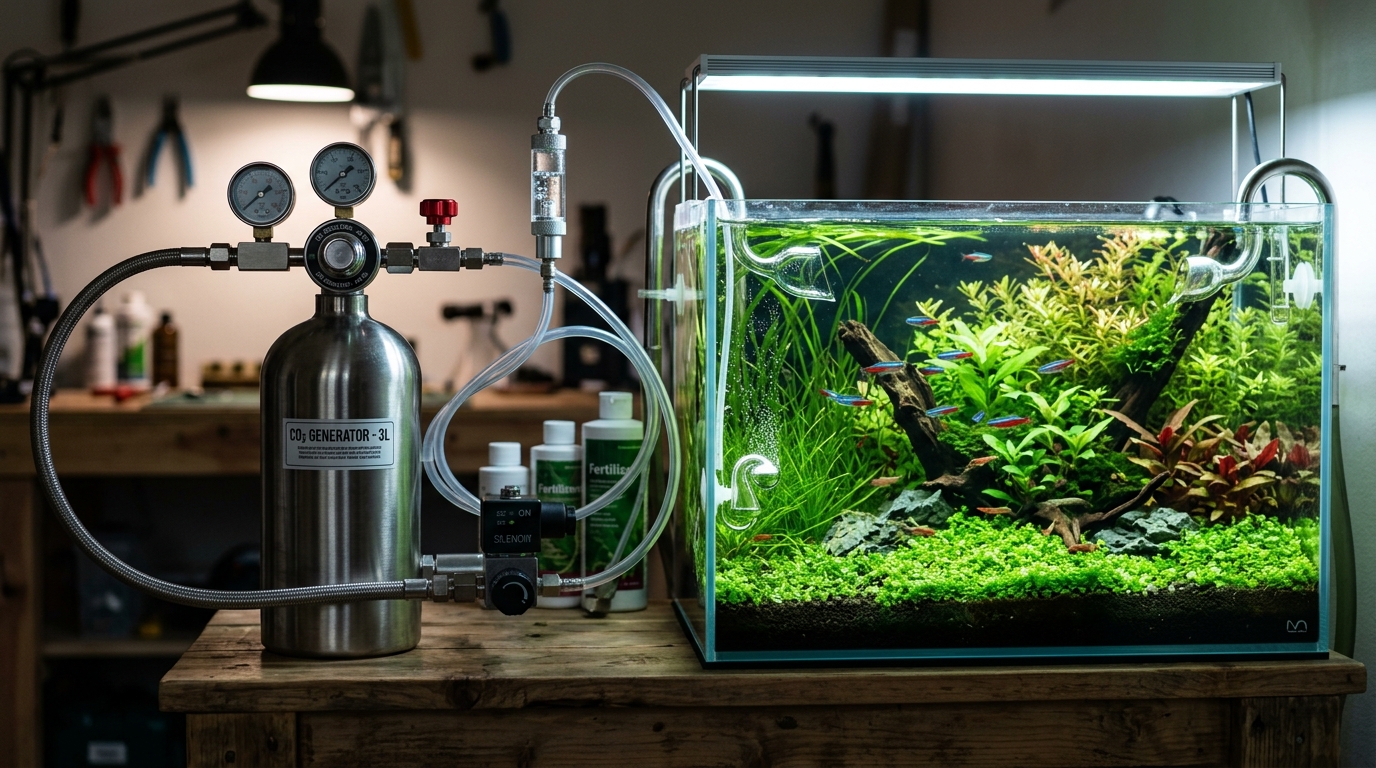
Unlike old-fashioned leaky soda bottle yeast setups, modern chemical generators use heavy 1.5mm stainless steel pressure cylinders:
- The Reaction: You combine food-grade Citric Acid powder, Sodium Bicarbonate (baking soda), and water inside the tank.
- Pure High Pressure: The chemical reaction creates pure CO2 gas, pressurizing the vessel up to 400 to 600 PSI (30 bar) safely.
- Precision Needle Valve & Solenoid: A dual-stage pressure regulator and integrated 12V electronic solenoid valve deliver a steady, micro-bubble count synchronized with your aquarium lighting timer.
Shop Stainless Steel Aquarium CO2 Generator Systems on Amazon
Essential Accessories for High-Tech Planted Tanks
- Ceramic Micro-Bubble Diffuser: Produces a fine mist of microscopic gas bubbles that dissolve into the water column before rising to the surface.
- Glass Drop Checker with 4 dKH Solution: A continuous pH indicator mounted inside the tank that glows emerald green when CO2 levels are at the ideal 30 ppm concentration.
- Inline Bubble Counter with Check Valve: Lets you count exact bubbles per second (e.g., 2 bubbles/sec) and prevents tank water from siphoning back into the regulator.
Browse Glass CO2 Drop Checkers & Reagent Indicators on Amazon
Frequently Asked Questions (FAQ)
How long does a 2.5-liter chemical CO2 batch last?
A standard 200g citric acid and 200g baking soda mix typically lasts 4 to 8 weeks on a 20-gallon planted tank running at 1 to 2 bubbles per second for 8 hours daily.
Will pressurized CO2 suffocate my aquarium fish?
Not when properly regulated! Always turn off the solenoid at night when plants stop photosynthesizing, and ensure your drop checker remains rich emerald green (yellow indicates dangerous excess CO2).