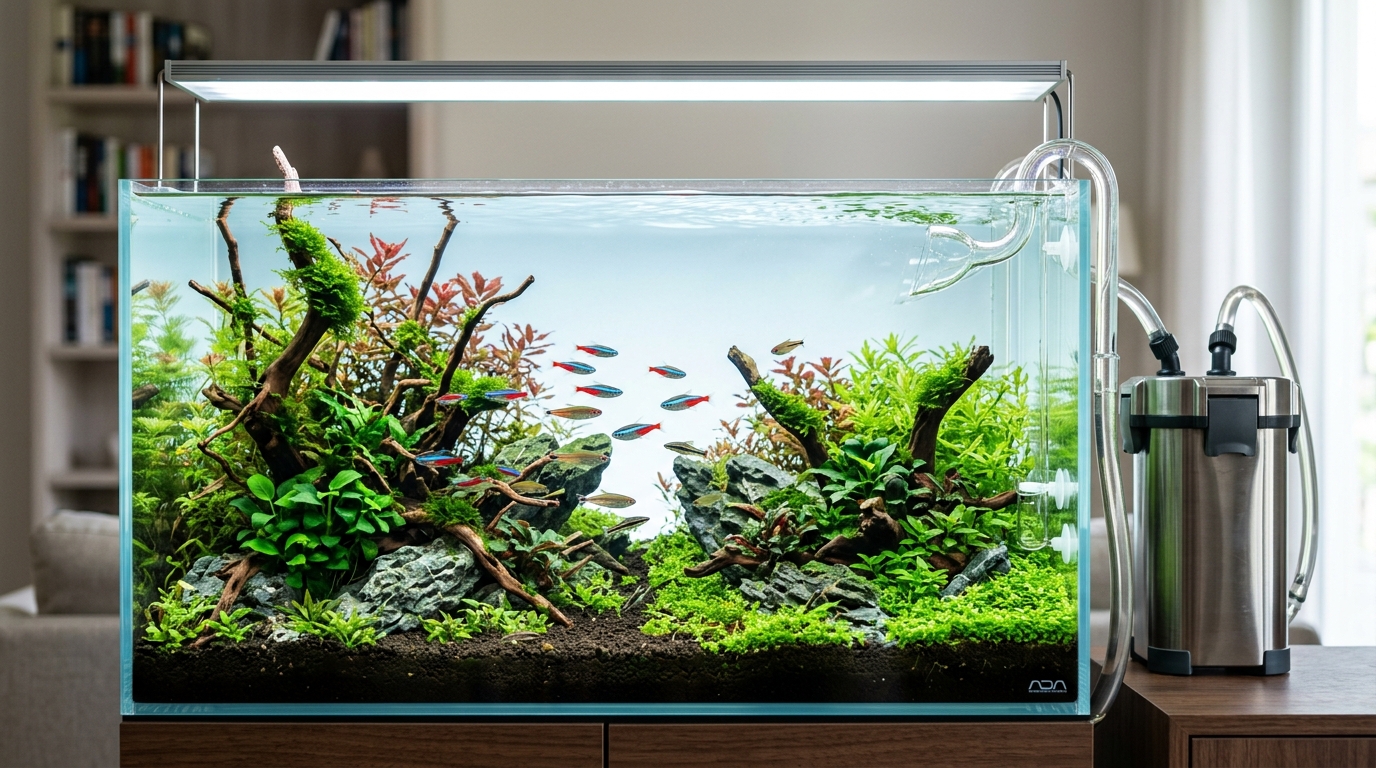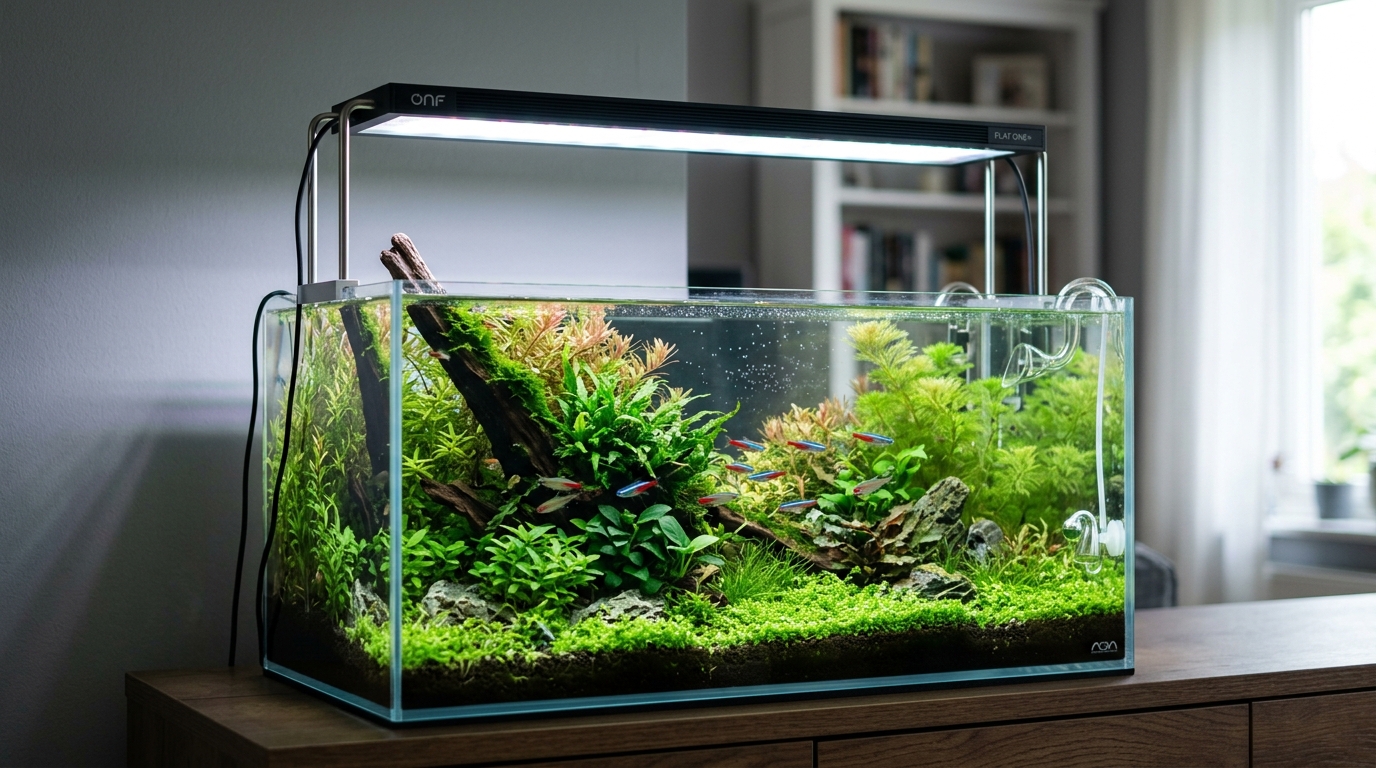
When newcomers attempt to create lush, emerald-green planted aquascapes like those seen on social media, they often plant expensive aquatic plants into ordinary colored aquarium gravel or plain silica sand. Weeks later, the plants turn yellow, melt, and dissolve away.
Inert gravel provides zero nutritional value. Heavy root-feeding aquatic plants (such as Cryptocorynes, Amazon Swords, and carpeting Monte Carlo) absorb the vast majority of their macro and micro-nutrients directly through their root systems.
A complete active aquasoil is composed of baked natural volcanic soil rich in organic humic acids, iron, potassium, and nitrogen that fuels explosive root growth.
Key Benefits of Active Aquasoil Substrates
- Softens Water & Buffers pH: Naturally absorbs carbonates, buffering aquarium pH to a mildly acidic 6.2 to 6.8—the exact sweet spot where aquatic plants and soft-water fish (like Tetras and Discus) thrive.
- High Cation Exchange Capacity (CEC): The porous soil granules act like nutrient magnets, binding liquid fertilizers from the water column and storing them for plant roots to draw upon as needed.
- Optimal Granule Porosity: 2mm to 4mm round soil grains allow delicate plant roots to spread effortlessly without compacting into an anaerobic dead zone.
Shop Top-Rated Planted Aquarium Aquasoils on Amazon
Top Aquasoil Brands Compared
- Fluval Plant and Shrimp Stratum: Volcanic soil sourced from Mount Aso, Japan. Highly porous, excellent for plant roots and dwarf shrimp breeding, does not release massive initial ammonia spikes.
- ADA Aqua Soil Amazonia: The legendary championship substrate used by master aquascapers. Releases high organic nitrogen for the first 3 weeks, requiring frequent initial water changes but producing unparalleled plant growth.
- CaribSea Eco-Complete: Complete volcanic mineral gravel that never degrades or breaks down into mud over time.
Browse Long Stainless Steel Aquascaping Tweezer & Scissor Tools on Amazon
Frequently Asked Questions (FAQ)
Should you rinse aquasoil before adding it to the tank?
NO! Never rinse aquasoil! Rinsing breaks the delicate baked soil granules into cloudy mud. Pour the dry soil into your empty aquarium, arrange your hardscape wood and rocks, and mist gently with water before filling slowly over bubble wrap.
How long does aquasoil last before becoming inert?
Aquasoil maintains active nutrient buffering for 2 to 3 years. After that period, you do not need to tear down the tank; simply insert root fertilizer tabs beneath heavy feeding plants every 3 to 4 months!