If you own a Dachshund, a Corgi, a Basset Hound, or any other breed characterized by a long spine and disproportionately short legs, you are likely aware of the constant, looming threat of Intervertebral Disc Disease (IVDD). These unique anatomical traits make their spines incredibly vulnerable to immense biomechanical stress. A simple, everyday action like jumping off a couch or hopping out of a car can generate enough concussive force to rupture a disc, leading to excruciating pain, permanent nerve damage, or even complete, irreversible paralysis of the hind legs.
For owners of these breeds, preventing jumps is not just a matter of training; it is an absolute medical necessity. The single most effective environmental modification you can make to protect your dog's spine is investing in high-quality orthopedic ramps for every elevated surface they use. In this comprehensive guide, we review the absolute best ramps designed specifically with the biomechanics of long-backed breeds in mind.
Why Stairs are Not Enough
Many owners purchase pet stairs, assuming they are solving the problem. However, stairs can actually be counterproductive for long-backed dogs. When a Dachshund navigates a set of stairs, their spine is forced into a series of sharp, unnatural curves (flexion and extension) with every single step. Furthermore, if they miss a step or try to skip steps in a rush, the jarring impact on their spine can be just as devastating as jumping directly onto the floor.
A continuous, smooth ramp is vastly superior. A ramp allows the dog to ascend and descend using a steady, natural walking gait, completely eliminating the concussive shock and severe spinal flexion associated with jumping or climbing stairs.
Key Features of a High-Quality Ramp
When evaluating a ramp for a Dachshund, there are several critical features you must prioritize:
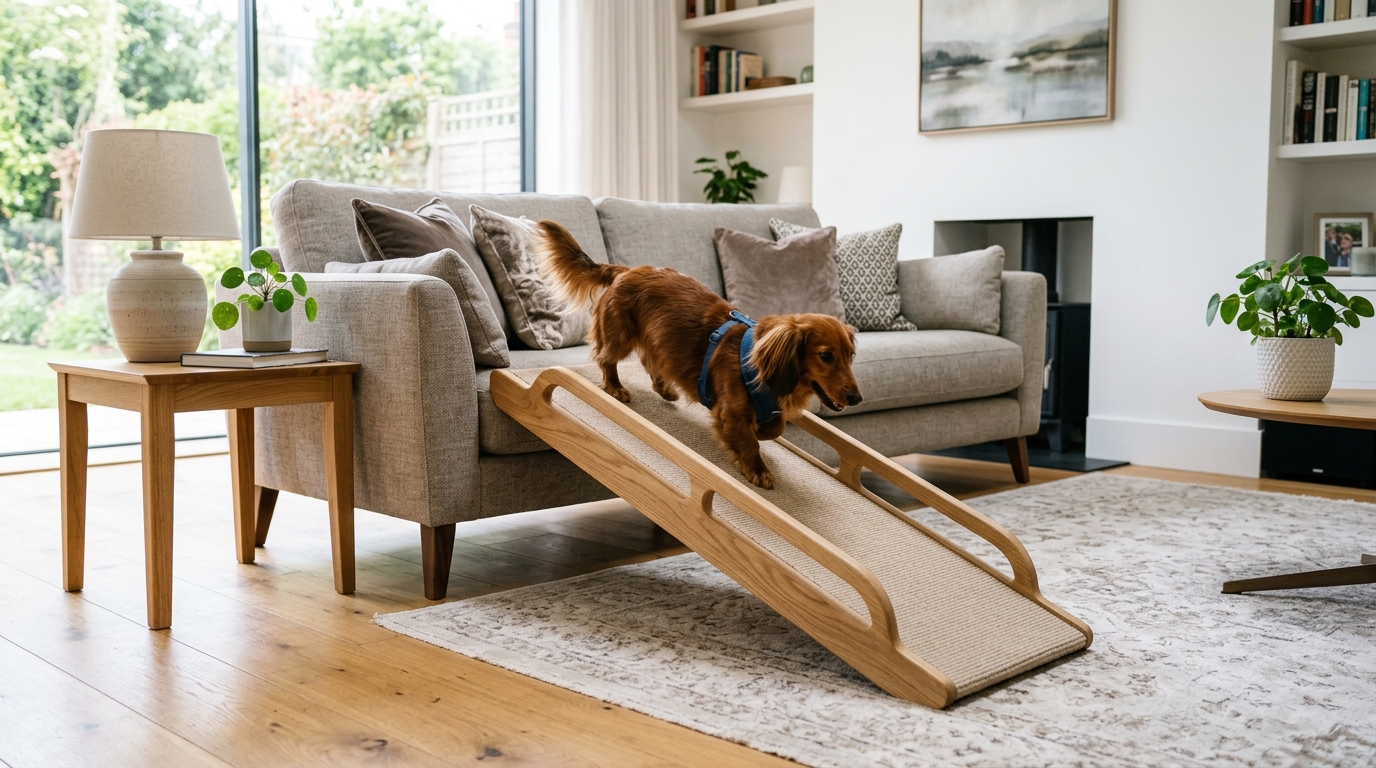
- Gentle Incline (Slope Angle): The entire purpose of a ramp is defeated if it is too steep. A steep ramp requires the dog to strain their back to climb and forces them to heavily brake on the way down, putting stress on their shoulders and spine. Look for ramps that are extraordinarily long (at least 36 to 40 inches for a standard couch) to ensure a very gradual, gentle incline (ideally under 25 degrees).
- High-Traction Surface: A slippery ramp is a massive hazard. If a dog loses their footing and slides down a ramp, they can easily twist their spine and cause a disc rupture. The best ramps utilize heavy-duty, rubberized grip materials (similar to the material used on boat decks) rather than cheap carpet, which can become slick over time.
- Sturdy, Wiggle-Free Construction: If a ramp wobbles, bends, or feels unstable under the dog's weight, they will refuse to use it. Solid wood construction with locking mechanisms is infinitely superior to flimsy, lightweight plastic models that flex when walked upon.
Training Your Dog to Use the Ramp
Purchasing the ramp is only half the battle; you must diligently train your dog to use it exclusively. This requires absolute consistency. Block off the edges of the couch or bed so the ramp is the only accessible route. Use high-value treats to lure them up and down the ramp slowly, rewarding them heavily for every successful trip. It is crucial to physically stop them from jumping if they attempt to bypass the ramp during the training phase.
Protecting a long-backed dog from IVDD requires vigilance, but a high-quality orthopedic ramp provides unparalleled peace of mind, knowing your best friend can safely navigate their home without risking their mobility.