When a cat is diagnosed with feline asthma or a chronic upper respiratory condition, every aspect of their environment must be rigorously evaluated to eliminate potential triggers. Airborne irritants, artificial fragrances, and microscopic dust particles can easily trigger severe, life-threatening asthma attacks, leaving a cat desperately gasping for air. While many owners immediately look at air purifiers or changing household cleaning products, they often overlook the single largest source of respiratory irritation in a cat's daily life: the litter box.
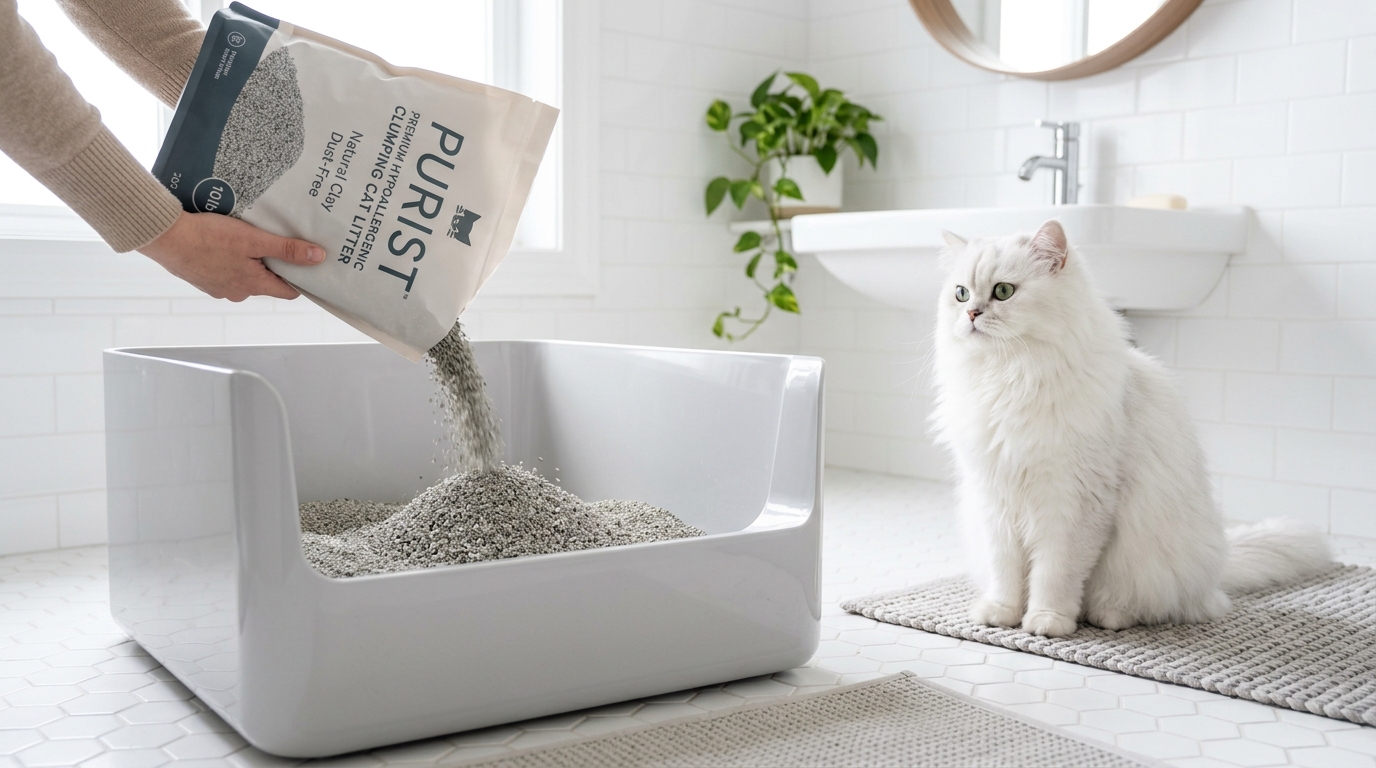
Traditional, cheap clumping clay litters are notorious for producing massive, billowing clouds of silica dust every time a cat digs, buries, or simply steps into the box. For an asthmatic cat, inhaling this microscopic silica dust multiple times a day is incredibly dangerous and can drastically worsen their respiratory symptoms. Therefore, switching to a genuinely hypoallergenic, 100% dust-free cat litter is absolutely mandatory for managing feline asthma. In this comprehensive guide, we review the safest, most effective hypoallergenic litter alternatives available in 2026.
The Dangers of Clay and Scented Litters
Sodium bentonite clay, the primary ingredient in most commercial clumping litters, is incredibly effective at absorbing urine, but it comes at a terrible cost to respiratory health. The dust from these clay litters contains crystalline silica, a known respiratory irritant that can cause chronic inflammation deep within the lungs.
Furthermore, many popular litters are heavily perfumed with artificial fragrances to mask the smell of ammonia. These synthetic perfumes are incredibly harsh on a cat's highly sensitive olfactory system and are a primary trigger for feline asthma attacks. When shopping for an asthmatic cat, your golden rule must be: Unscented, Non-Clay, and 99.9% Dust-Free.
Top Hypoallergenic Alternatives
1. Paper Pellet Litter
Recycled paper pellet litter is widely considered the safest, most hypoallergenic option recommended by veterinarians for cats recovering from surgery or suffering from severe respiratory distress. The pellets are remarkably soft on delicate paws and produce absolutely zero dust when poured or dug into. They are completely unscented and highly absorbent. The primary drawback is that paper pellets do not clump, meaning you will need to completely dump and wash the litter box more frequently than you would with a clumping variety to maintain strict odor control.
2. Tofu-Based Litter
A relatively new innovation that has taken the premium pet care market by storm, tofu litter is manufactured from the natural byproduct of soy milk production. The tofu is extruded into small, soft, cylindrical pellets that are entirely dust-free. Remarkably, unlike paper, tofu litter is highly clumping. It forms solid, scoopable masses upon contact with liquid, making daily maintenance incredibly easy while still protecting your cat's fragile lungs. Because it is plant-based, it is biodegradable, flushable in small quantities, and naturally neutralizes ammonia odors without the need for artificial perfumes.
3. Large-Granule Crystal Litter
While some crystal litters (silica gel) can be dusty, premium brands that utilize exceptionally large, coarse granules are virtually dust-free. Crystal litter works differently than traditional litters; rather than clumping, the highly porous crystals absorb liquid urine and trap the odor molecules inside instantly. You only need to scoop the solid waste and stir the crystals daily to distribute the moisture. A single bag can last an entire month for one cat, providing unparalleled odor control in a completely dust-free, unscented environment.
Managing the Transition
Cats are notoriously stubborn creatures of habit, and drastically changing their litter substrate can lead to litter box avoidance if not handled delicately. When introducing a new hypoallergenic litter to an asthmatic cat, you must transition slowly. Start by mixing 20% of the new litter with 80% of their old litter, gradually increasing the ratio of the new litter over two to three weeks. This allows them to adjust to the new texture and lack of familiar scents without anxiety.