Choosing the right guinea pig bedding is the single most crucial decision you will make for your pet's respiratory health, hygiene, comfort, and daily happiness.
Guinea pigs have exceptionally sensitive respiratory systems, delicate footpads prone to painful infections like pododermatitis (bumblefoot), and high metabolic rates that produce substantial daily urine and waste. Choosing an inferior or dusty substrate quickly leads to overpowering ammonia odors, damp fur, fungal skin issues, and costly veterinary visits.
In this comprehensive 1,500+ word master buyer's guide, we compare every major bedding substrate—Reusable Fleece Liners, Kiln-Dried Aspen, Dust-Free Paper, and Hemp—evaluating odor absorption, long-term costs, cleaning effort, and veterinary safety.
Comprehensive Guinea Pig Bedding Comparison
| Bedding Type | Absorbency & Dryness | Odor Control | Respiratory Safety | Annual Cost | Weekly Cleaning Time | | :--- | :--- | :--- | :--- | :--- | :--- | | Reusable Fleece Liners | ⭐⭐⭐⭐⭐ (Wicks urine down) | ⭐⭐⭐⭐ (Needs spot cleaning) | ⭐⭐⭐⭐⭐ (Zero dust) | $ (Lowest long-term) | 10-15 mins daily / 1 wash/wk | | Virgin Paper Bedding | ⭐⭐⭐⭐⭐ (High absorption) | ⭐⭐⭐⭐⭐ (Excellent) | ⭐⭐⭐⭐ (Look for 99% dust free) | $$$$ (High recurring) | 20 mins weekly dump | | Kiln-Dried Aspen Wood | ⭐⭐⭐ (Moderate) | ⭐⭐⭐ (Natural scent) | ⭐⭐⭐⭐ (Phenol-free) | $$ (Economical) | 20 mins weekly dump | | Hemp Bedding | ⭐⭐⭐⭐ (Very absorbent) | ⭐⭐⭐⭐⭐ (Low ammonia) | ⭐⭐⭐⭐⭐ (Naturally low dust) | $$$ (Moderate) | 20 mins weekly dump | | Cedar / Raw Pine | ⭐⭐⭐ | ⭐⭐⭐⭐ | ❌ DANGEROUS (Toxic Phenols) | Do Not Use | N/A |
1. Reusable Fleece Cage Liners: The Modern Gold Standard
Over the past decade, reusable fleece liners have revolutionized guinea pig care across the world:
How Fleece Liners Work
Unlike traditional disposable shavings, fleece does not absorb liquid on its surface. Instead, properly "wicked" polar fleece pulls urine straight through the top layer into an ultra-absorbent internal bamboo or microfiber core, leaving the top surface completely dry to the touch within seconds.
Major Benefits of Fleece
- Zero Respiratory Dust: Eliminates the coughing, sneezing, and eye irritation associated with dusty wood shavings.
- Massive Long-Term Cost Savings: While initial starter sets cost $30-$60, they last for years, saving hundreds of dollars compared to weekly disposable bags.
- Bumblefoot Prevention: Provides a plush, supportive cushion that protects soft guinea pig feet from pressure sores.
- Eco-Friendly: Drastically reduces landfill waste created by weekly disposable bedding changes.
Shop Reusable Waterproof Fleece Guinea Pig Liners on Amazon
How to Wash and Care for Fleece
- Spot-Clean Daily: Use a handheld mini broom, dustpan, or cordless vacuum to sweep up stray droppings and excess hay twice daily.
- Wash Weekly in Warm Water: Use unscented, dye-free laundry detergent with 1/2 cup of distilled white vinegar (a natural deodorizer and fabric softener).
- Never Use Commercial Fabric Softeners: Fabric softeners coat fleece fibers with a water-resistant wax film, destroying its ability to wick urine!
- Initial Wicking Process: Wash new fleece liners 2 to 3 times with vinegar before first use to break the factory water barrier.
2. Dust-Free Paper Bedding: The Ultimate Disposable Option
For pet owners who prefer convenient disposable bedding without laundry routines, high-grade virgin paper bedding is the premier choice.
- Expands up to 3x: Expands into a plush, soft mattress that encourages natural foraging and burrowing.
- Unmatched Odor Control: Advanced formulas neutralize ammonia for up to 10 to 14 days in well-ventilated C&C cages.
- What to Avoid: Steer clear of scented paper bedding (lavender, citrus) which can trigger severe allergic bronchospasms in guinea pigs. Always choose unscented, dye-free, 99.9% dust-free paper.
Browse Top-Rated Dust-Free Paper Bedding on Amazon
3. Wood Shavings: What is Safe and What is Dangerous?
Wood shavings remain popular due to low costs, but caution is mandatory:
❌ DANGEROUS: Cedar & Non-Kiln Dried Pine
Never use cedar or raw pine shavings. These softwoods contain volatile aromatic hydrocarbons (phenols) that cause severe liver damage, eye irritation, and chronic respiratory inflammation in small animals.
✅ SAFE: Kiln-Dried Aspen
Aspen is a hardwood naturally free of harmful aromatic phenols. When kiln-dried and triple-screened for dust, aspen provides an economical, natural, and biodegradable substrate.
4. The Kitchen & Hay Area Strategy (Hybrid Setup)
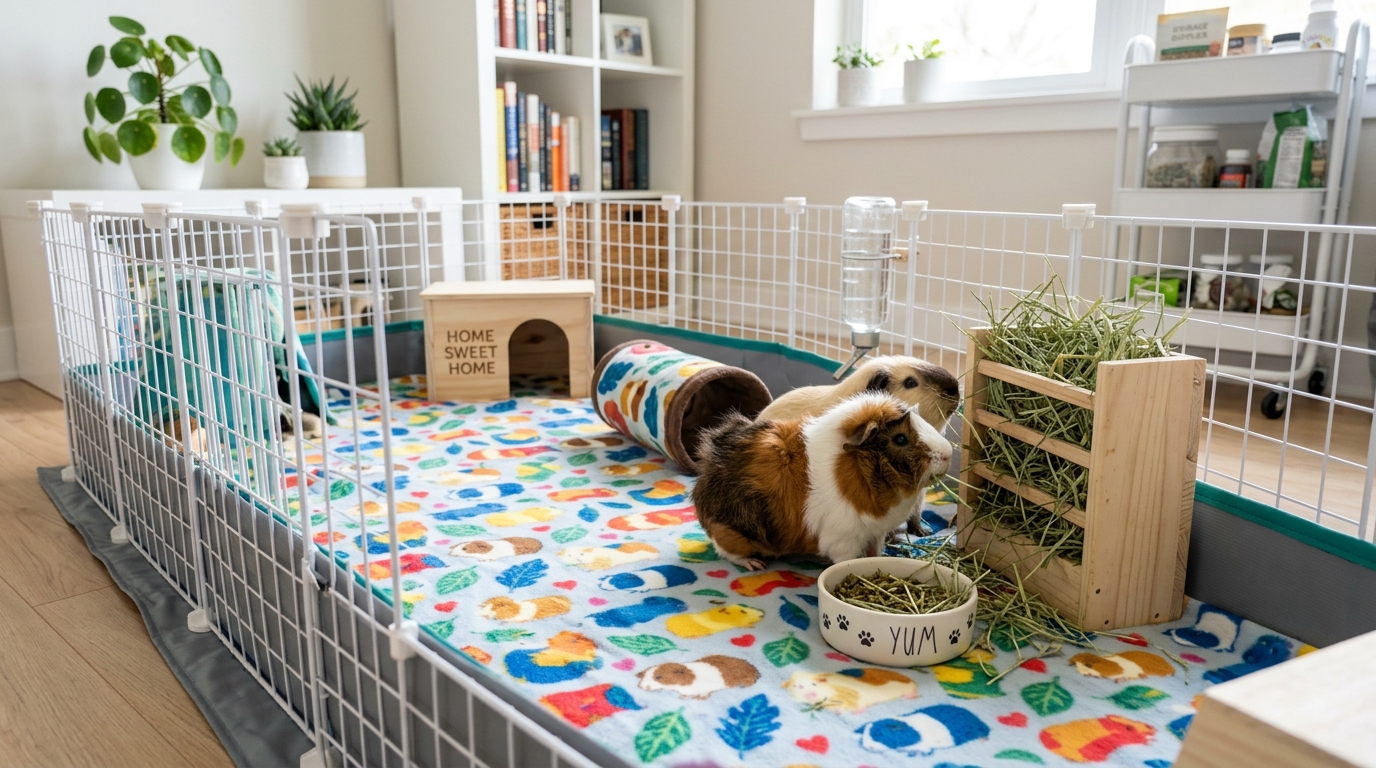
The most efficient, odor-free cage configuration used by expert guinea pig sanctuaries is the Hybrid Setup:
- Living / Sleeping Zone: Lined with soft, reusable fleece liners for cozy lounging and running zoomies.
- "Kitchen" / Hay Feeder Zone: A dedicated plastic tray filled with paper bedding or aspen shavings placed directly beneath the hay rack.
- Why It Works: Guinea pigs do 70% of their urinating and defecating while eating hay. By placing disposable bedding in the kitchen area, your main fleece liners stay clean and dry for up to twice as long!
Find High-Capacity Wooden Guinea Pig Hay Feeders on Amazon
5. Step-by-Step Cage Cleaning Schedule
- Daily (5 Minutes): Sweep up fecal pellets from fleece liners; replenish fresh Timothy hay; wipe out water bowls.
- Mid-Week (10 Minutes): Empty and replace bedding in the "Kitchen" hay tray; spot-wipe high-traffic hideout corners.
- Weekly (30 Minutes): Remove fleece liners for laundry wash; sanitize cage base with a 50/50 vinegar-water solution; install fresh clean liners.
Frequently Asked Questions (FAQ)
How often should guinea pig bedding be changed?
- Fleece Liners: Spot-clean daily (2 minutes) and wash the full liner every 5 to 7 days.
- Disposable Paper / Aspen: Spot-clean wet corners every 2 days and replace 100% of the bedding once weekly.
Why is my guinea pig's cage smelling like ammonia?
Ammonia builds up when urine breaks down in damp substrate. Ensure your cage has an open wire grid top (never a closed plastic lid or aquarium tank) and increase the depth of bedding or frequency of fleece laundering.
Can I use cat litter or puppy pee pads for my guinea pig?
- Cat Litter: Absolutely not! Clay and clumping cat litter are lethal if ingested and create dangerous dust.
- Puppy Pee Pads: Safe only if placed underneath a secure fleece liner where guinea pigs cannot chew on the plastic or absorbent gel layers.
How do I know if my guinea pig has bumblefoot?
Check the bottom of their paws weekly. Healthy feet are smooth and pinkish/grey. If you notice redness, swelling, cracks, or scabs, switch to plush fleece bedding immediately and consult an exotic vet.
8. Safe Bedding for Nursing Guinea Pigs & Newborn Pups
If you are caring for a pregnant sow or newborn guinea pig pups (which are born fully furred with eyes open and teeth erupted), special bedding considerations apply:
- Avoid Long Fiber Wood Shavings: Coarse wood flakes can poke delicate newborn eyes and umbilical areas.
- Double-Layer Padded Fleece: High-density padded fleece liners provide essential traction for tiny paws learning to walk, preventing hip splay deformities.
- Daily Corner Sanitization: Nursing mothers produce double the typical waste output. Change absorbent corner pads daily to keep the nursery dry and warm.
Shop Hypoallergenic Reusable Fleece Liners for Small Pets on Amazon
Conclusion
Whether you choose the eco-friendly comfort of reusable fleece liners or the convenient absorbency of dust-free paper bedding, investing in a premium substrate guarantees a fresh-smelling home and a long, healthy life for your beloved guinea pigs.
6. Cost Analysis: Fleece Liners vs. Disposable Paper over 3 Years
Let us compare the true financial investment of reusable fleece liners versus premium disposable paper bedding for a standard 2x4 C&C cage (approximately 10.5 square feet):
- Reusable Fleece Liners (3-Year Total Cost: ~$120):
- Initial Purchase (3 sets of high-grade waterproof liners): $90
- Laundry Detergent & Vinegar (~$10/year): $30
- Total 3-Year Investment: $120
- Disposable Virgin Paper Bedding (3-Year Total Cost: ~$1,080):
- Weekly Bedding Usage (One 60L bag every 2 weeks @ $15/bag): $30/month
- Annual Disposable Cost: $360
- Total 3-Year Investment: $1,080
- Savings with Fleece: Over $960 saved, which can be redirected toward premium veterinary care, fresh daily vegetables, and habitat enrichment toys!
7. Troubleshooting Common Bedding Problems
Problem 1: Fleece Liners Are Puddling (Not Wicking)
If water beads on the surface of your fleece instead of soaking through instantly, the fabric has a chemical barrier (either factory sizing or detergent residue).
- Fix: Machine-wash the fleece 3 times in hot water using 1 cup of distilled white vinegar and 2 tablespoons of blue Dawn dish soap (no laundry detergent). Let it air dry and test with a drop of water.
Problem 2: Strong Hay Clinging to Fleece in the Wash
Timothy hay can embed into fleece fibers and clog your washing machine pump.
- Fix: Use a rubber squeegee or stiff-bristled brush to sweep hay off liners into a dustpan before laundering. Always place fleece liners inside a zippered pet laundry wash bag to catch stray fibers.