Rabbits have a unique anatomical trait: their teeth (incisors and cheek molars) are open-rooted and grow continuously throughout their entire lives at an astonishing rate of 3 to 5 inches per year!
In the wild, rabbits constantly grind their teeth down by chewing abrasive native grasses, bark, and roots. When indoor pet rabbits lack adequate fiber and safe chewing substrates, their teeth develop razor-sharp spurs and malocclusion, causing severe mouth lacerations, abscesses, and fatal digestive stasis.
Providing safe, high-fiber rabbit chew toys is an essential daily veterinary health requirement.
Safe vs. Toxic Woods for Pet Rabbits
✅ 100% Safe Chewing Materials:
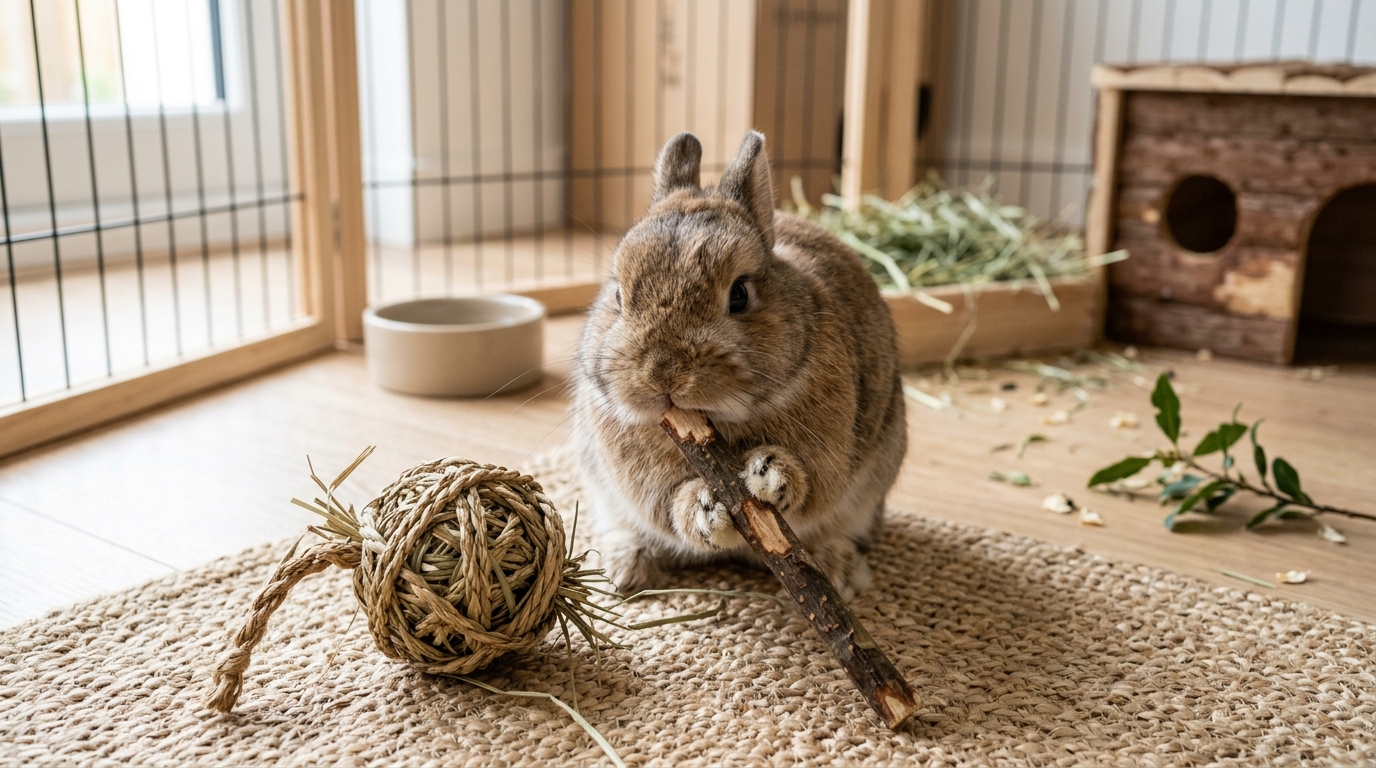
- Natural Apple Wood Sticks: A favorite sweet, crunchy wood that rabbits enthusiastically strip of bark.
- Woven Timothy & Meadow Hay Balls: Provides both abrasive dental grinding and crucial gut-stimulating long-strand fiber.
- Untreated Willow Branches & Loofah Slices: Natural, chemical-free textures that satisfy the instinctual urge to gnaw.
- Kiln-Dried Pine & Aspen: Safe for chew toys when free of aromatic oils.
❌ Dangerous Materials to Avoid:
Never give cedar, cherry, peach, plum, or redwood branches (which contain toxic cyanogenic glycosides), or plastics that can splinter and obstruct the gastrointestinal tract.
Shop Natural Apple Wood Sticks & Woven Hay Toys on Amazon
How to Keep Your Bunny Mentally Engaged
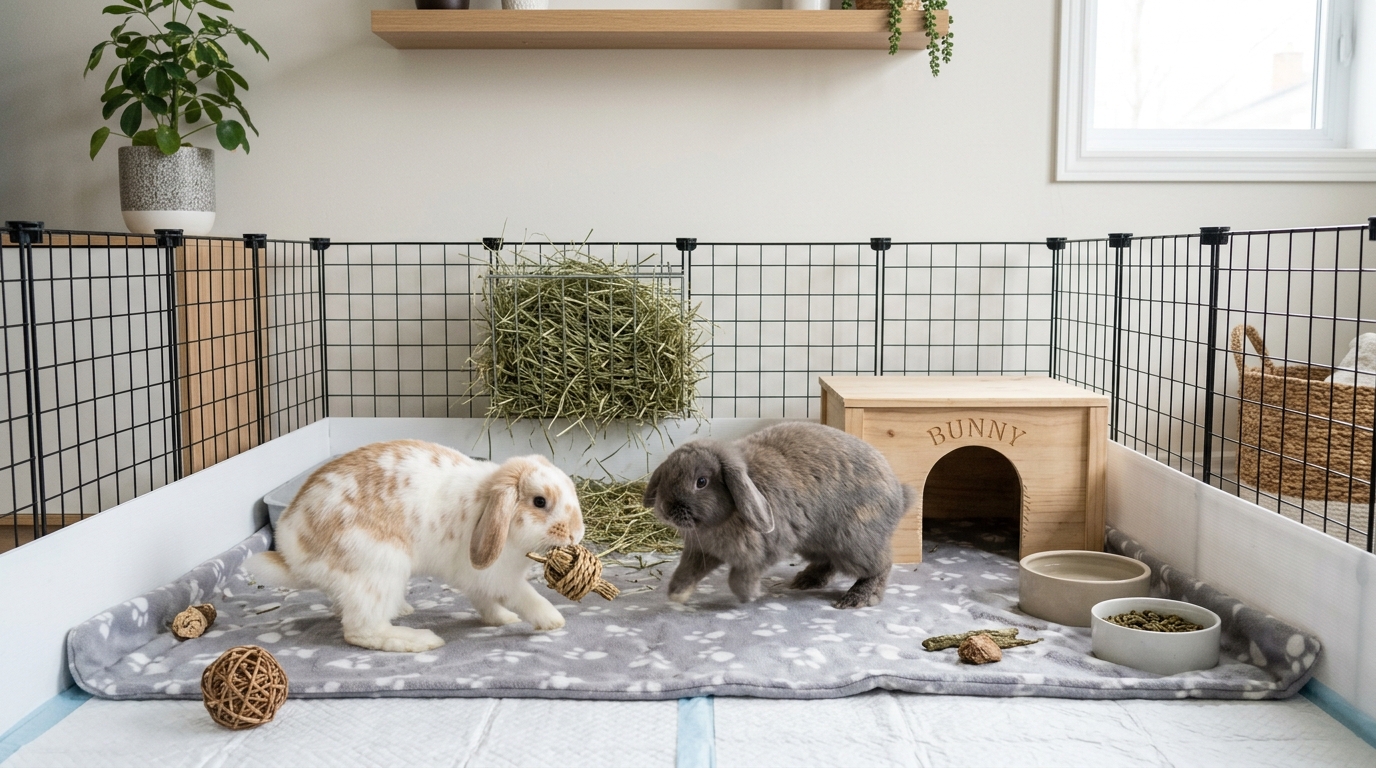
- Hang Toys from Enclosure Grids: Hanging woven balls and mobile wood sticks encourages standing and stretching.
- Hide Pellets Inside Hay Bundles: Stuff cardboard tubes with fragrant green Timothy hay and a few dried herbs to turn chewing into an exciting foraging puzzle.
- Rotate Toys Weekly: Rabbits get bored quickly. Keep three sets of toys and swap them out every Sunday to maintain novelty.
Browse High-Fiber Timothy Hay Variety Packs on Amazon
Frequently Asked Questions (FAQ)
What is the #1 best thing for rabbit teeth?
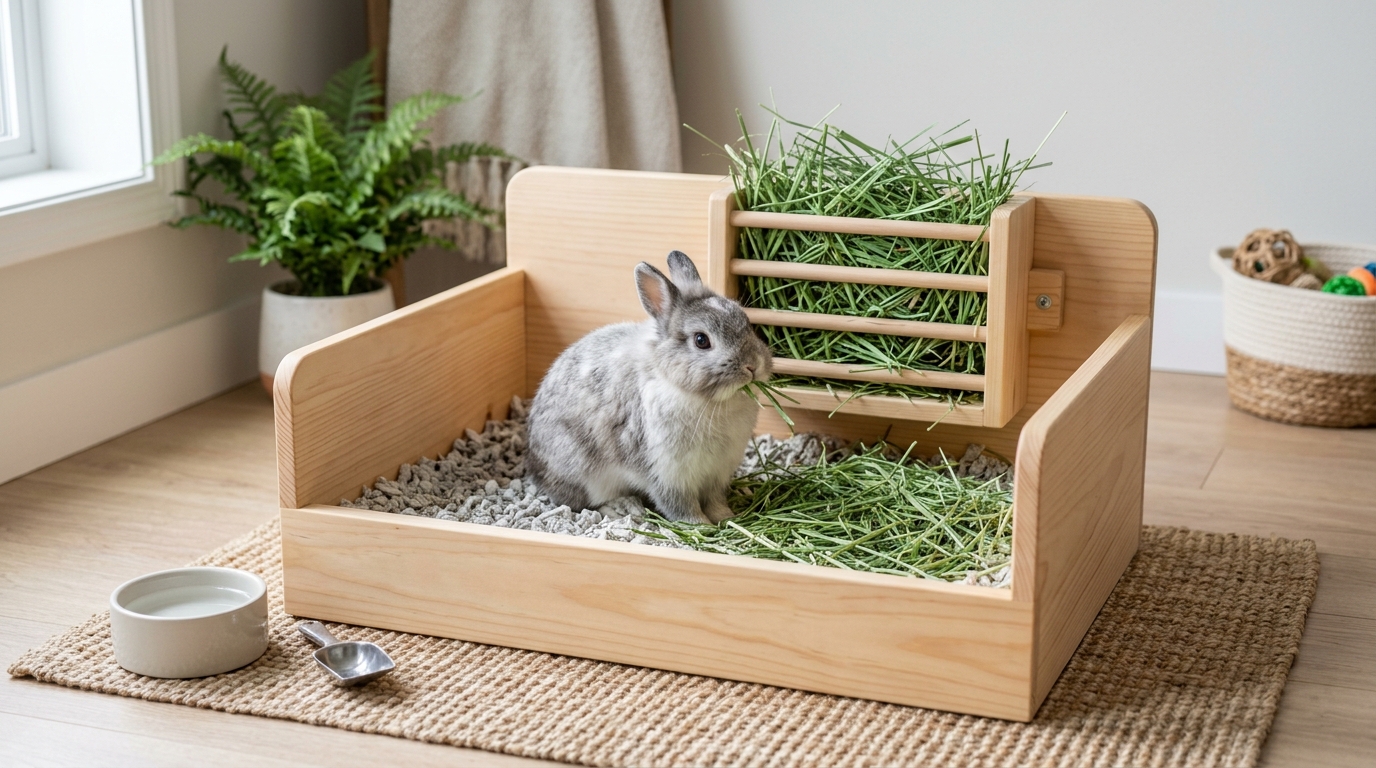
Unlimited fresh, long-strand grass hay (like Timothy, Orchard, or Meadow hay) should make up 80% to 90% of your rabbit's daily diet. Chew sticks complement hay by wearing down front incisors.
How can I tell if my rabbit has dental problems?
Watch for warning signs: drooling (wet chin), dropping food while chewing, watery eyes, reduced appetite, or small, misshapen fecal droppings. If any of these appear, consult an exotic rabbit veterinarian immediately.