Rainy spring walks and winter snow jaunts often end in the same dreaded ritual: wrestling your dog at the front door with an old bath towel while muddy paw prints stamp across your hardwood floors and carpets.
Towel drying only smears surface mud around without removing abrasive sand, allergens, and toxic winter road salt trapped between footpads.
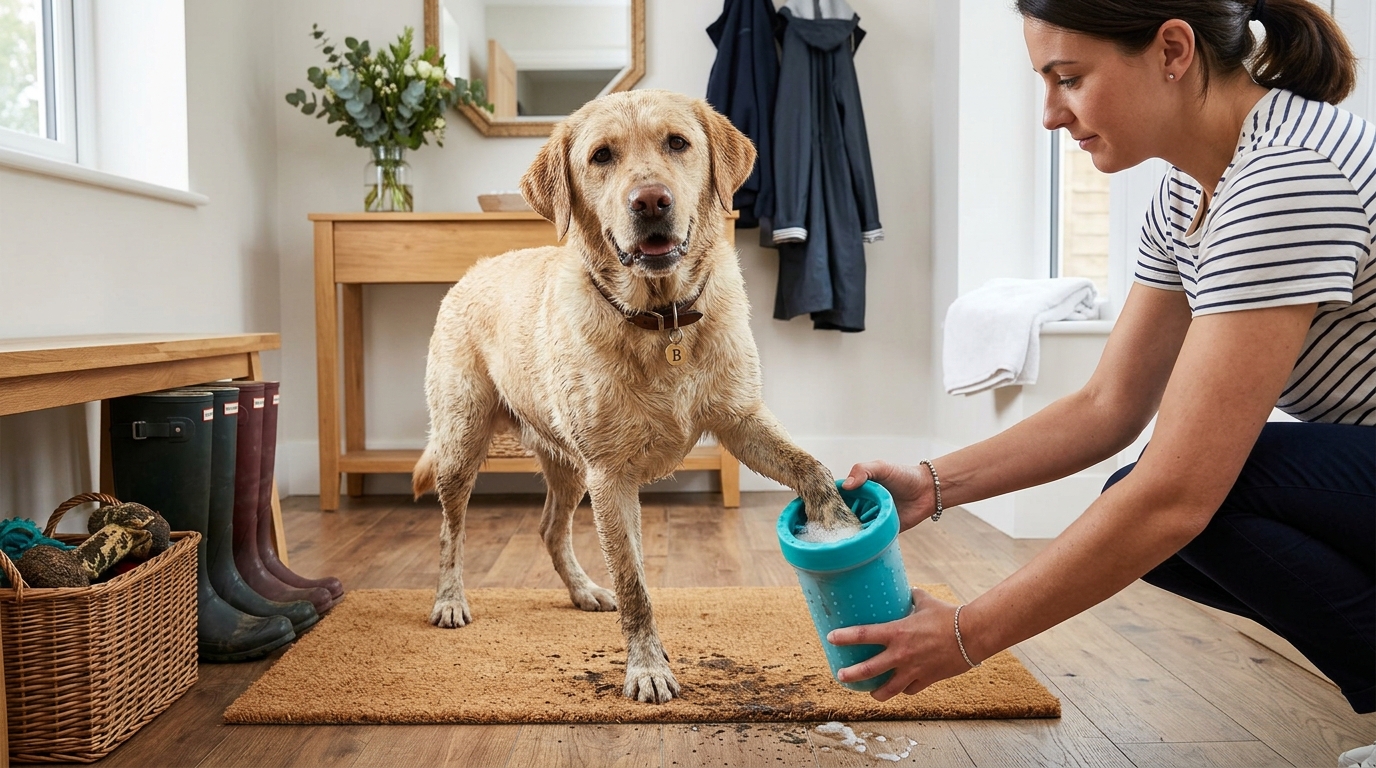
A portable silicone dog paw cleaner cup solves this dilemma in under 60 seconds with zero mess and zero fuss.
How Silicone Paw Plungers Work
A paw cleaner cup consists of a durable plastic tumbler lined with hundreds of soft, flexible silicone bristles arranged in a spiral pattern:
- Add Lukewarm Water: Fill the cup three-quarters full with warm tap water and a single drop of pet-safe foaming shampoo.
- Insert the Paw: Gently guide your dog's muddy paw into the cylinder.
- Twist and Plunge: Rotate the cup back and forth 3 to 4 times. The soft silicone fingers flex into the webbed crevices between toes, dislodging stubborn mud clods effortlessly.
- Dab with Microfiber: Pull the clean paw out and dry with a plush microfiber towel. Repeat for all four paws!
Shop Top-Rated Silicone Dog Paw Cleaner Cups on Amazon
Paw Cups vs. Pre-Moistened Paw Wipes: Which is Better?
| Feature | Silicone Paw Plunger Cup | Pre-Moistened Paw Wipes | | :--- | :--- | :--- | | Best For | Heavy mud, soaked clay, winter road salt | Light dust, pollen, quick road trip touchups | | Eco-Friendliness | Reusable for years (dishwasher safe) | Single-use disposable waste | | Deep Cleansing | Flushes grit deep between webbed toes | Cleans exterior pad surfaces only | | Portability | Requires water source | Extremely compact in resealable pouches |
Browse All-Natural Hypoallergenic Dog Paw Wipes on Amazon
Frequently Asked Questions (FAQ)
Do dogs tolerate silicone paw cleaners?
Most dogs find the soft silicone bristles soothing, similar to a gentle paw massage. Introducing the cup slowly with high-value treats creates positive association within 2 to 3 days.
Why is removing road salt from dog paws critical?
Winter ice-melt chemicals contain calcium chloride and sodium ferrocyanide. When dogs lick stinging salty paws after walks, they can ingest dangerous levels of toxins leading to chemical burns and stomach distress.