Ferrets are playful, curious, and extraordinarily energetic pets. But when it comes to their digestive biology, ferrets possess one of the most specialized and unforgiving gastrointestinal tracts in the animal kingdom.
Ferrets are strict obligate carnivores. In nature, their wild ancestors (European polecats) consumed whole prey—small rodents, birds, and insects—deriving 100% of their nutrients from animal proteins and fats.
Furthermore, a ferret's digestive tract is exceptionally short: food passes from ingestion to excretion in just 3 to 4 hours. Because they lack a cecum and cannot ferment dietary fiber, feeding an improper diet leads to devastating conditions like insulinoma, bladder stones, and inflammatory bowel disease (IBD).
In this comprehensive guide, we examine what true ferret nutrition requires and rank the best high-protein, meat-first diets on the market.
The Golden Nutritional Ratios for Ferrets
When reading the guaranteed analysis on a bag of ferret food, look for these veterinary benchmarks:
- Crude Protein: 35% to 40% (Minimum): Must come from named animal sources (chicken, turkey, duck, egg)—never corn gluten, soy, or pea protein.
- Crude Fat: 20% to 22% (Minimum): Fat is a ferret's primary energy currency. Animal fats (poultry fat, salmon oil) ensure glossy coats and boundless stamina.
- Crude Fiber: Under 3%: Plant fiber offers zero nutritional value to ferrets and can trigger dangerous intestinal blockages.
- Carbohydrates: Under 10% to 15%: High-carb diets cause chronic pancreatic stress, directly accelerating the onset of insulinoma (pancreatic tumors).
Shop High-Protein Meat-First Ferret Kibble on Amazon
❌ The "Pea & Legume" Danger (Cystine Bladder Stones)
Over the past five years, exotic veterinarians have sounded the alarm over cheap plant fillers in commercial pet foods. Many grain-free brands replace wheat with peas, lentils, and chickpeas.
In ferrets, legumes contain high concentrations of precursor amino acids that crystallize in the bladder, forming agonizing cystine uroliths (bladder stones) that require emergency surgical removal.
Crucial Rule: Inspect the ingredient label carefully. If you see green peas, pea flour, pea protein, or lentils within the first 10 ingredients, do not buy it.
Top Protein Sources for Ferrets
- Deboned Chicken & Turkey Meal: Highly digestible animal protein with optimal amino acid profiles.
- Dried Whole Eggs: The biological gold standard for protein bioavailability and cellular repair.
- Salmon & Menhaden Fish Oils: Supplies vital EPA and DHA omega-3 fatty acids for cardiovascular and skin health.
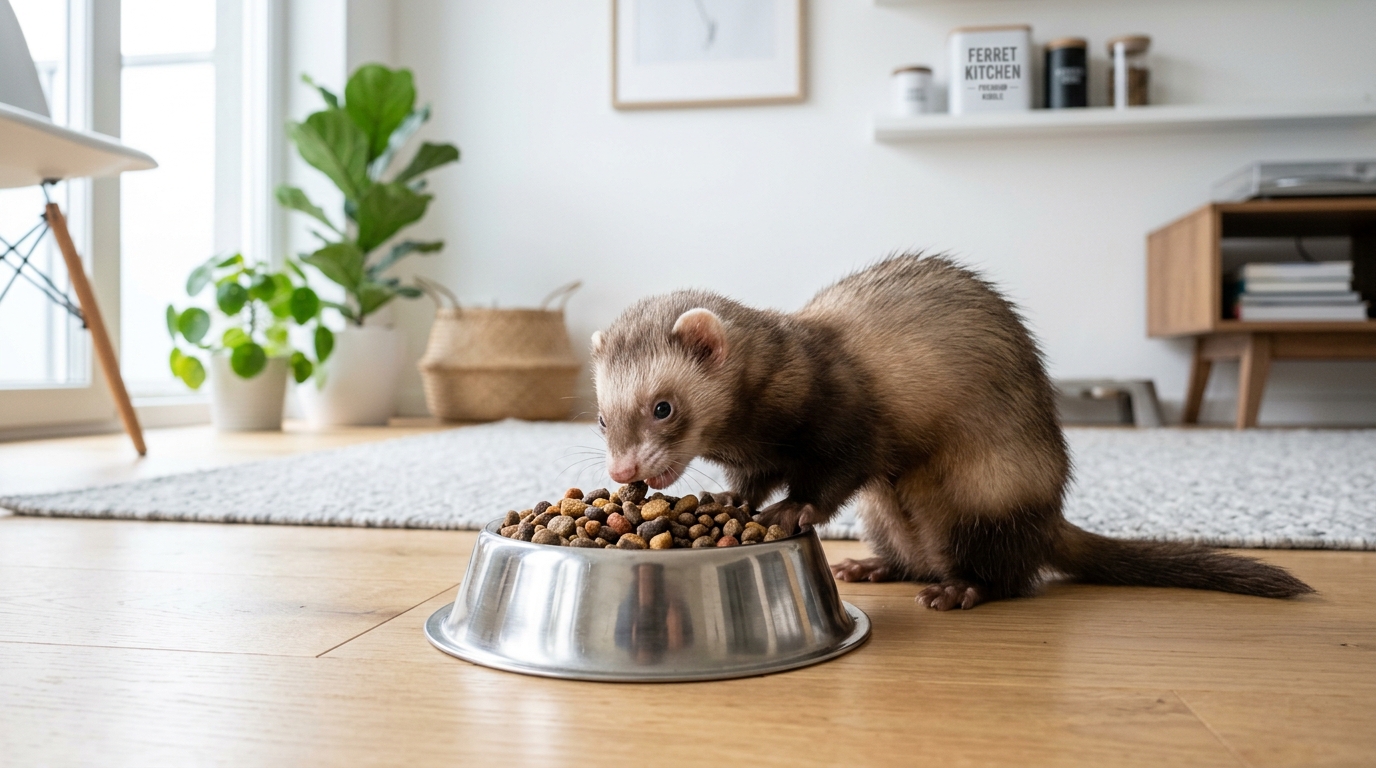
Browse Stainless Steel Non-Tip Ferret Feeding Bowls on Amazon
Why Mixing 2 to 3 Brands is Essential
Ferrets imprint on their food during the first 6 to 9 months of life. If a manufacturer changes their recipe or discontinues your brand, an imprinted ferret may stubbornly starve itself rather than accept a new kibble.
Expert ferret owners always feed a 50/50 blend of two distinct high-quality kibble brands. This guarantees nutritional variety and protects your pets from sudden supply chain shortages.
Frequently Asked Questions (FAQ)
Can ferrets eat cat food?
Ferrets can eat high-end, ultra-premium kitten foods (such as Wysong Epigen 90 or Orijen Cat & Kitten) because growing kittens require high protein and fat. However, standard adult grocery-store cat food contains far too many grains and carbohydrates for ferrets.
How often should ferrets be fed?
Due to their rapid 3-4 hour metabolic cycle, ferrets should have free-choice access to fresh kibble and clean water 24/7. They naturally eat small meals every few hours without gorging.
Can ferrets eat fruits and vegetables as treats?
No! Fruits are high in fructose sugars, and vegetables contain indigestible cellulose fiber. Both cause digestive upset, insulin spikes, and urinary stones. Offer cooked unseasoned chicken chunks or salmon oil as healthy treats instead.