If you are the proud owner of a chinchilla, you already know their fur is legendary for its surreal softness. In fact, chinchillas have the densest fur of any land mammal, boasting an astonishing 60 to 80 individual hairs growing from a single hair follicle (compared to just 1 or 2 hairs in humans).
However, this incredible density comes with a critical evolutionary vulnerability: water can be lethal to chinchillas.
Because their fur is so dense, water cannot easily evaporate. A wet chinchilla can take days to dry, trapping moisture against the skin and causing severe fungal infections (ringworm), fur rot, and hypothermia.
Instead of water, chinchillas maintain their radiant coats using natural volcanic dust baths. In this expert guide, we review the highest-rated volcanic dust powders and enclosed ceramic bath houses to keep your pet clean, soft, and thriving.
How Chinchilla Dust Baths Work
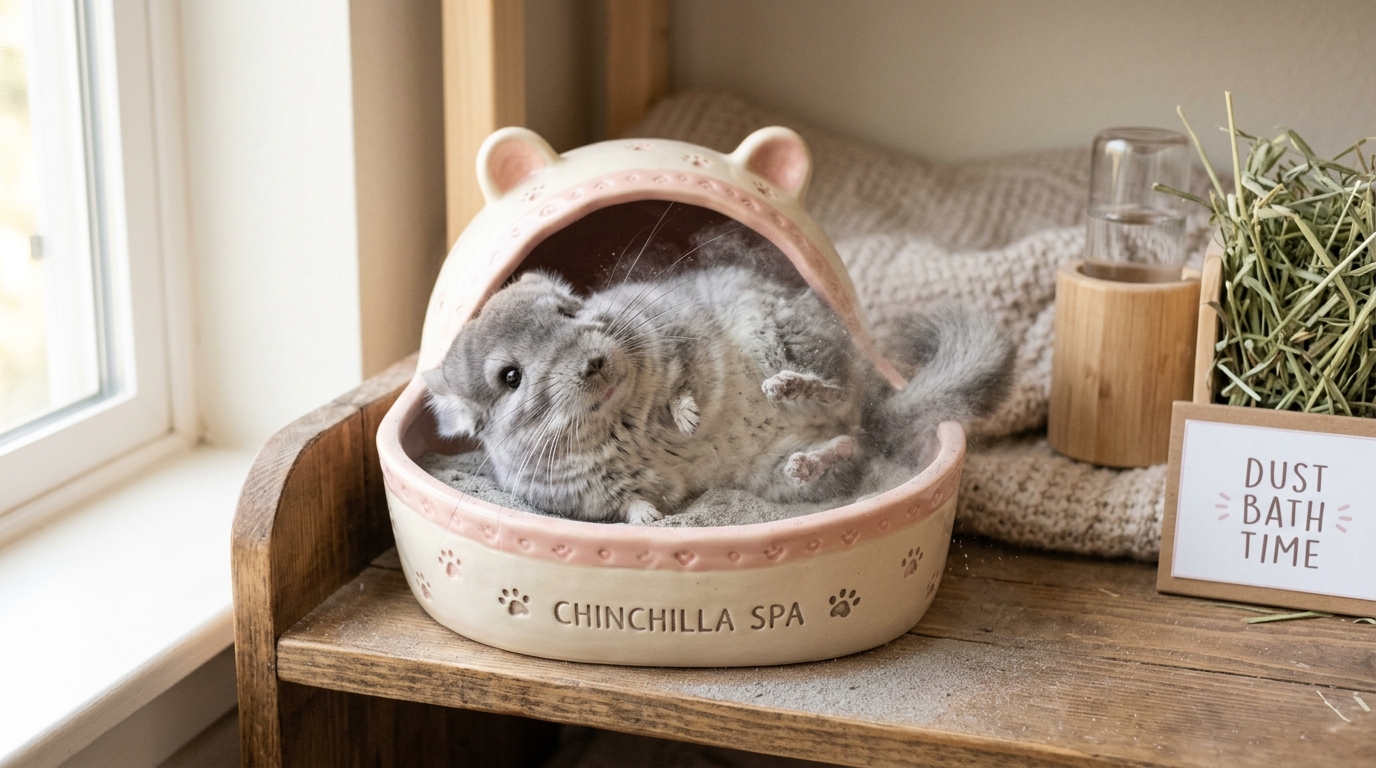
In the arid Andes mountains of South America, wild chinchillas roll in fine volcanic ash and pulverized pumice. This ultra-fine dust penetrates down to the skin, absorbing excess sebum oils, moisture, and debris without stripping natural hydration:
- Pore-Deep Sebum Absorption: Traps natural skin oils that would otherwise make the fur greasy and matted.
- Parasite Defense: The abrasive microscopic structure of volcanic pumice deters fur mites and lice naturally.
- Mental Relaxation: Dust bathing is a joyful, instinctual ritual. Watching a chinchilla flip and somersault in a dust bath is one of the greatest pleasures of pet ownership!
Shop 100% Natural Volcanic Chinchilla Dust on Amazon
Volcanic Pumice vs. Dust Alternatives: What is Safe?
Not all commercial bath powders are created equal. Choosing the wrong dust can cause severe eye abrasions or respiratory distress:
✅ RECOMMENDED: 100% Pure Volcanic Pumice
Sourced from natural volcanic deposits (such as Blue Cloud or Chilldust), pure pumice is sustainably mined and ground to a soft, talc-free consistency that floats gently through dense fur.
❌ AVOID: Sand or Quartz Powders
Coarse silica sand has sharp, jagged edges that slice through delicate chinchilla hair shafts and scratch their corneas.
❌ AVOID: Scented Bath Powders
Commercial products with added perfumes (lavender, citrus) irritate sensitive rodent lungs and cause allergic respiratory sneezing. Always select unscented, pure volcanic dust.
Ceramic vs. Plastic Dust Bath Houses
Where your chinchilla bathes is just as important as the dust itself. Chinchillas bathe with explosive energy, kicking dust clouds into the air:
- Enclosed Ceramic Bath Houses (Best Overall): Heavy enough that energetic chinchillas cannot flip them over. The arched roof keeps 90% of flying dust contained within the basin. Plus, the cool ceramic surface provides a soothing lounging spot in summer.
- Covered Acrylic Bath Boxes: Clear acrylic allows you to watch your pet's flips while containing dust plumes, though they can develop chewing scratches over time.
Browse Heavy-Duty Ceramic Chinchilla Bath Houses on Amazon
How Often Should a Chinchilla Take a Dust Bath?
- Standard Climate (Low to Moderate Humidity): 2 to 3 times per week for 10 to 15 minutes per session.
- Humid Summer Months: 3 to 4 times per week to prevent greasy fur.
- Dry Winter Months: 1 to 2 times per week. Bathing daily in dry winter weather can dry out their ear rims and footpads.
Pro Tip: Never leave the dust bath inside the cage permanently! If left in the cage, chinchillas will use the dust bath as a litter box, soiling the expensive pumice and bathing in dirty dust. Always remove the bath house after 15 minutes.
Frequently Asked Questions (FAQ)
Can I reuse chinchilla dust?
Yes! Use a fine-mesh kitchen sifter to remove loose droppings and hay pieces after each bath. You can safely reuse the clean sifted dust for 3 to 4 weeks before replacing it completely.
What should I do if my chinchilla gets wet accidentally?
Wrap your chinchilla in a dry microfiber towel immediately and pat gently (never rub harshly). Use a pet blow dryer on the cool/no-heat setting held at least 18 inches away until the undercoat is completely dry, then offer a fresh dust bath.
What causes eye irritation from dust baths?
If your chinchilla frequently develops watery eyes after bathing, the dust may be too fine or dusty. Switch to a slightly coarser volcanic grain brand and reduce bath frequency to twice weekly.